
“The Outsiders,” a coming-of-age production about rival teenage gangs, has remained a favorite among audiences around the world. Originally a novel, the story has been adapted for film, featuring stars like Rob Lowe and Tom Cruise, and for the stage, with productions on and off Broadway. From Oct. 16-25, the University of Nevada, Reno’s theatre department brought the story to life at Redfield Proscenium Theatre.
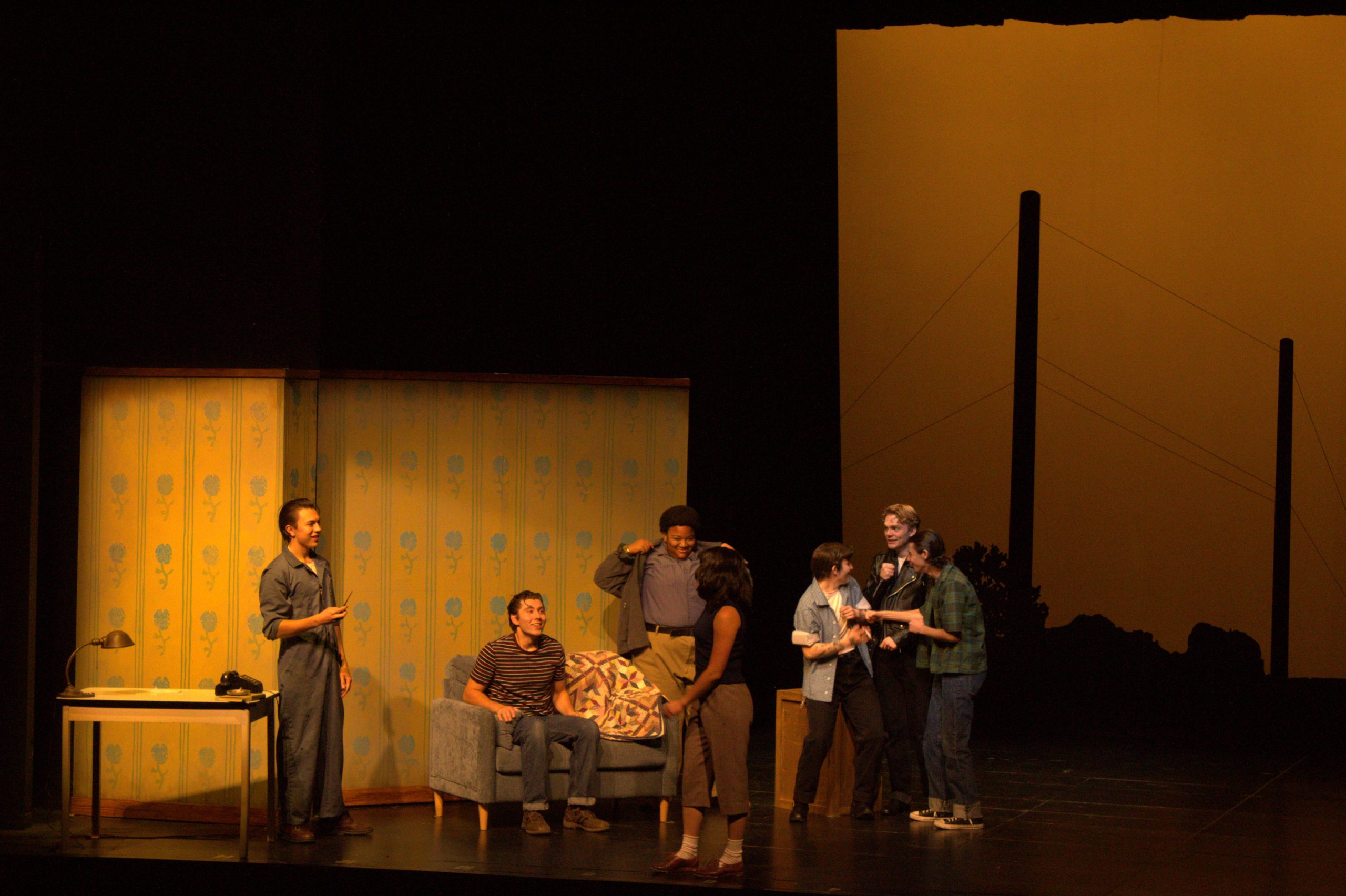
The set design and costuming captured the audience’s attention before the actors even spoke. Guests were welcomed by a detailed set featuring trees and bushes, backlit by an orange sunset. The production also recreated familiar locations from the original film, including Ponyboy’s bedroom and the infamous abandoned church, adding a sense of nostalgia for longtime fans.
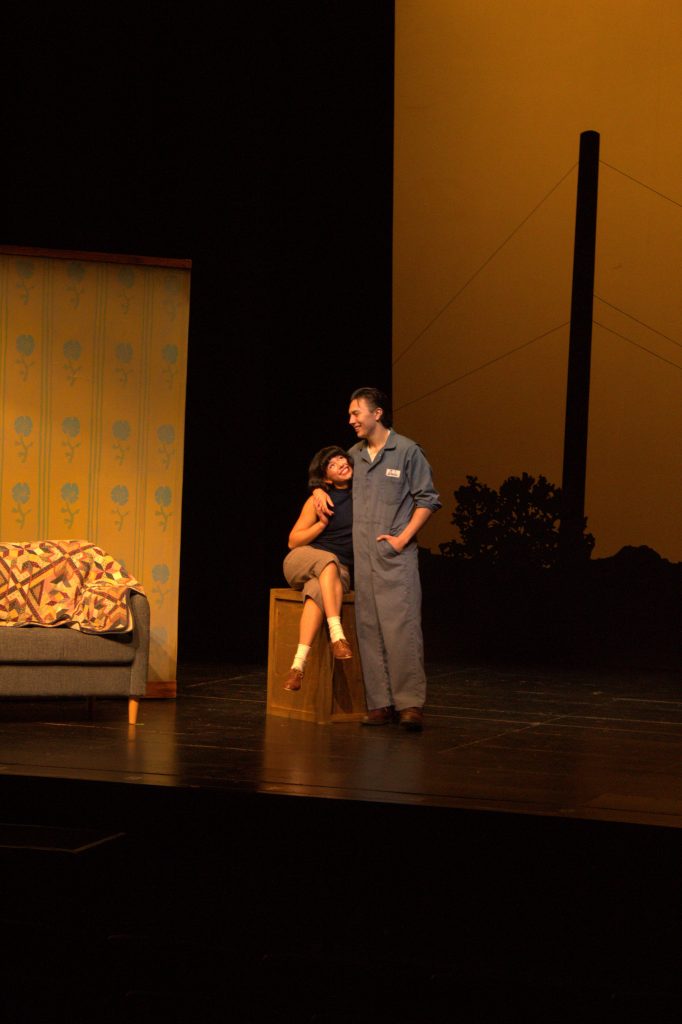
Both the set and costumes were reminiscent of the Broadway production. The wardrobe helped the actors look age-appropriate and accurate to the time period, which can be difficult when college students portray teenagers in the 1960s. Each costume reflected the character’s personality without feeling too on-the-nose.
Eliot Gomez played Ponyboy, a 14-year-old boy navigating the challenges of poverty, grief and societal pressure. His performance highlighted the frustrations, attitude and behaviors of a teenager, giving the audience a glimpse into Ponyboy’s complicated state of mind.
Other standout performances included Bradley Simmons as Dallas, Mare Enger as Two-Bit and Ora Harris as Darry. Enger, in particular, stole every scene with comedic timing that had the audience genuinely laughing aloud. Audience members could even argue that this version of Two-Bit was actually funnier than Emilio Estevez’s version in the original film.
The emotional scenes between Ponyboy and Darry were beautifully executed. Another show-stealing performance was Simmons’ portrayal of Dallas. In most adaptations, Dallas is a rough, jaded teenage boy with a hard-knock background. Simmons’ performance kept these aspects while introducing a unique sense of humor to Dallas’ character. Simmons balanced dramatic, heart-wrenching dialogue throughout the play in combination with Dallas’ individualistic humor.
The rumble, the climax of the show, kept the audience on the edge of their seats. The fight choreography was wonderful, and Ponyboy’s breaks for his internal monologue blended beautifully with the rest of the scene.
However, the play did have some out-of-place moments. There was a scene where it’s discovered that Johnny and Ponyboy have gone missing, but its placement within the show felt unnatural. Ponyboy’s brothers, Sodapop and Darry, were in shambles, and Sodapop’s girlfriend, Sandy, announced that she is breaking up with Soda and moving to Florida.
This scene is included in the movie, musical and book, but it takes place at more appropriate times. The specific timing of Sandy breaking up with Soda directly after his brother went missing could leave audiences confused, and it slowed down the overall pace of the play.
There were also some slight technical difficulties due to the lack of microphones. The actors did a great job projecting their voices, but since the sound wasn’t clear, some lines got lost, leaving audiences without the full context for specific scenes. The lack of microphones often distracted from the gravity of some extremely important moments.
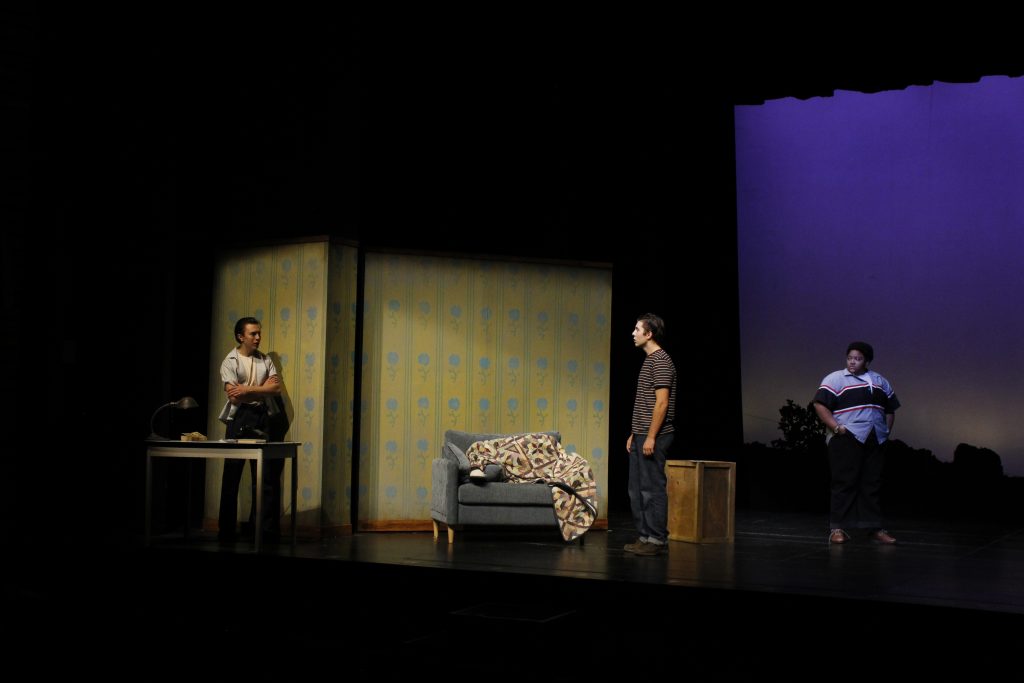
Another difference in this adaptation in comparison to the movie, book and musical is the lack of a death scene for Dallas. Dallas’s death is one of the most important parts of the book because it shows the societal implications of the class divide between the rich and poor, but this adaptation didn’t feature a death scene for Dallas at all. Killing off such an important character without depicting what happened could leave audiences confused about how Dallas actually died. The show could benefit from a deeper dive into how Dallas’s death represents the culture surrounding gangs in the ‘50s and ‘60s.
All in all, the show was a great adaptation of the original book. As the characters were brought to life from page to stage, the audience had the chance to leave satisfied with a beautiful, nostalgic story. Following this production, the next opportunity to support UNR’s theatre department is the fall cabaret,“Hope!”, on Nov. 6 and Nov. 7.