
Halloween night falls on a Saturday this year. While some students may see this as the perfect opportunity for a Halloweekend bender, staying safe is just as important as having fun.
Madison Eifert, public outreach coordinator of the University Police Department-Northern Command (UPDNC), said the campus police are on higher alert during Halloweekend.
“We’ve seen in the past just more students out and about, more students consuming alcohol, more students on the roadways at night,” Eifert said. “It just kind of presents more opportunities for crime to occur.”
She said a lot of people will know their alcohol tolerance, but they won’t take into account how alcohol interacts with other seemingly harmless drugs, such as over-the-counter or prescription substances like antibiotics.
According to the Centers for Disease Control and Prevention, drinking alcohol simultaneously or a few hours after using other drugs like benzodiazepines or opioids can increase the risk for overdose, substance use disorders, injury and chronic disease.
Additionally, Eifert said students need to watch out for their drinks being spiked.
“Go with a group, watch your drink if you’re going to be drinking, make sure it’s not contaminated,” said Eifert.
Spiking is sometimes called getting “roofied,” deriving from Rophypnol, a powerful sedative. Another commonly used drug is gamma-hydroxybutyrate, also known as liquid ecstasy. Both can be clear, tasteless and odorless, depending on the form. These substances are commonly called date rape drugs.
According to Worldmetrics, roughly 80% of date rape drug assault victims are singled out by perpetrators when they appear to be in a vulnerable state, intoxicated or distracted.
If you think your drink has been contaminated, common symptoms to watch out for are a sudden influx of nausea, dizziness, fatigue and unexpected drunkenness or feeling way more “drunk” than expected off of a single shot or two.
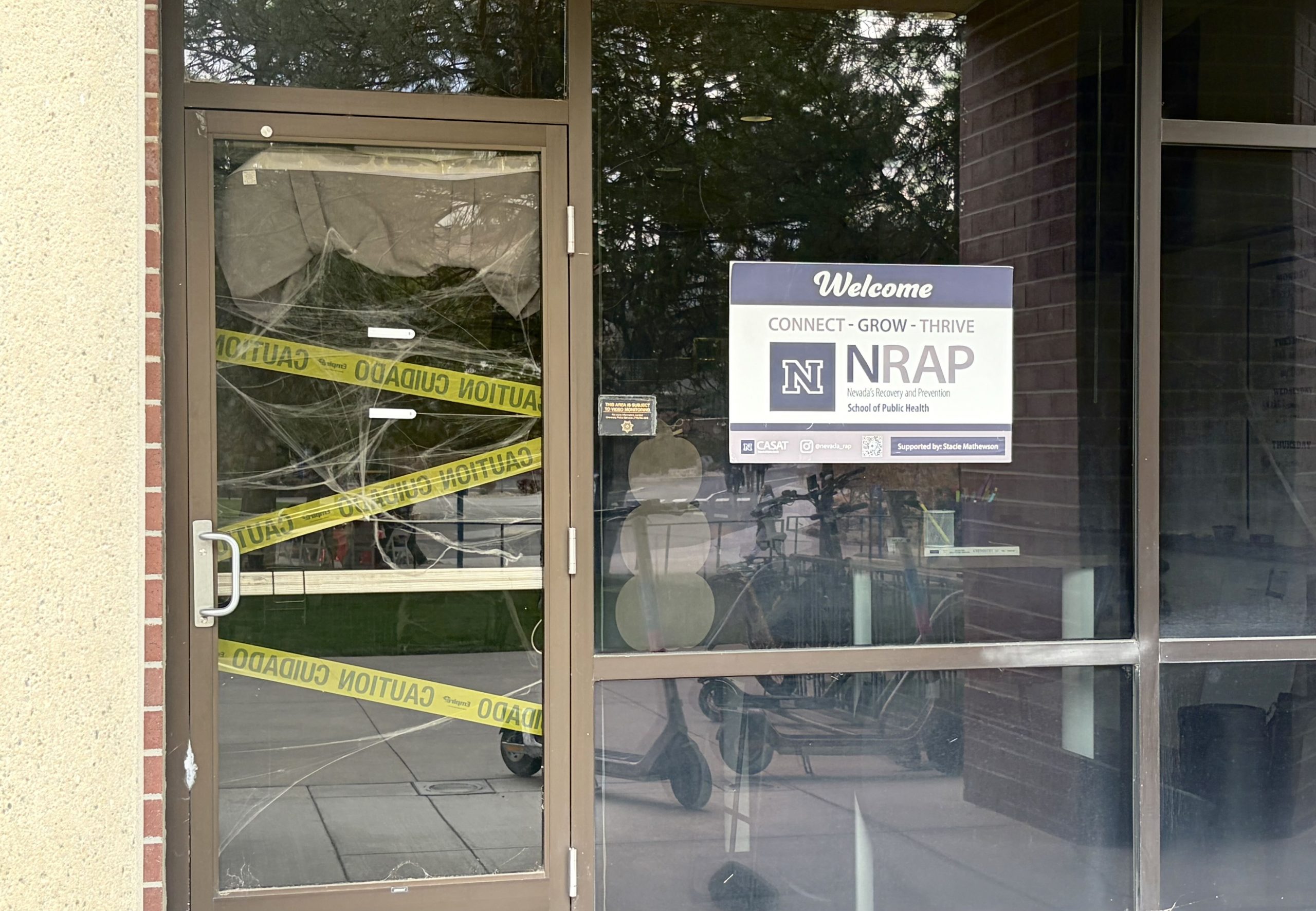
Daniel Fred, director of Nevada’s Recovery and Prevention Program (NRAP), said he expects to see ketamine, cocaine, kratom, weed and alcohol used more than anything else this Halloweekend.
Fred said using a Blood Alcohol Content (BAC) calculator can help students plan around how intoxicated they want to get.
“It’s so simple because it’s scientifically based. Your BAC tells you what state of mind you are going to be in. People learn their limits normally by going past them, but you can learn your limits just by your BAC,” Fred said.
Fred said if students want to get to the point of blacking out, they need to have a plan and find people who can take care of them.
NRAP also partners with the Center for the Application of Substance Abuse Technologies (CASAT) in providing resources to students for drug misuse and overdose prevention. Students can receive free access to narcan and fentanyl test strips from CASAT upon completing their WebCampus course.
Students who didn’t take the training course but want Naxolene, a medication used to rapidly reverse an opioid overdose, can speak with NRAP through the contact page on their website. They can also go in-person in the William Raggio Building room 1001.
Halloweekend falls in the “Red Zone”: the six to 10-week time period from the first day of the fall semester through Thanksgiving break when 50% of sexual assault cases on college campuses occur. Freshmen are the most vulnerable to this phenomenon.
Lexi Rodriguez, project coordinator for NevadaCARES, said it’s important to teach students how to stay safe, but if something happens, the fault should be fully attributed to the system and perpetrators, not the victims.
NevadaCARES is a program that employs victim advocates and offers support to victims of sexual violence on campus.
“It’s not my job to fear monger students into believing that it’s up to them to defend themselves against individuals, because I think then it goes back to our students and it makes it our student’s fault. That’s not at all the case,” Rodriguez said.
Victim blaming is commonly used by perpetrators to pressure victims into silence. According to RAINN, an average of 30% of female and 18% of male university student survivors reach out to campus resources for help.
“We need to teach people to do better, and to actually take care of each other and watch out for one another,” Rodriguez said.
Back at the campus police, Eifert also encourages students to care for each other this Halloweekend.
”Have a plan for sticking together with a group, have people hold you accountable for how much you’re drinking or where you’re going,” Eifert said. “That way, everyone makes it home safe at the end of the night.”
She suggested that students wear bright colored costumes to make it easier to find each other after dark. She added this will also help students avoid being hit by cars.
“We are actually working on a pedestrian safety campaign right now to make sure [students] are walking around wearing well-lit gear,” said Eifert. “A dark costume on a dark background makes it really hard for drivers to see pedestrians.”
UPDNC has been working with Associated Students of the University of Nevada (ASUN) to do Halloween safety outreach with students. This includes handing out free flashlights and glowing lanyards for students to use while walking at night.
In the end, Eifert says campus police will be prioritizing student safety this Halloweekend.
“We do what we can to make sure we’re actively patrolling the walkways and just around campus to make sure everyone has a fun night out,” Eifert said
For more information on BAC level and resources for substance abuse disorder, students can visit CASAT’s official website.