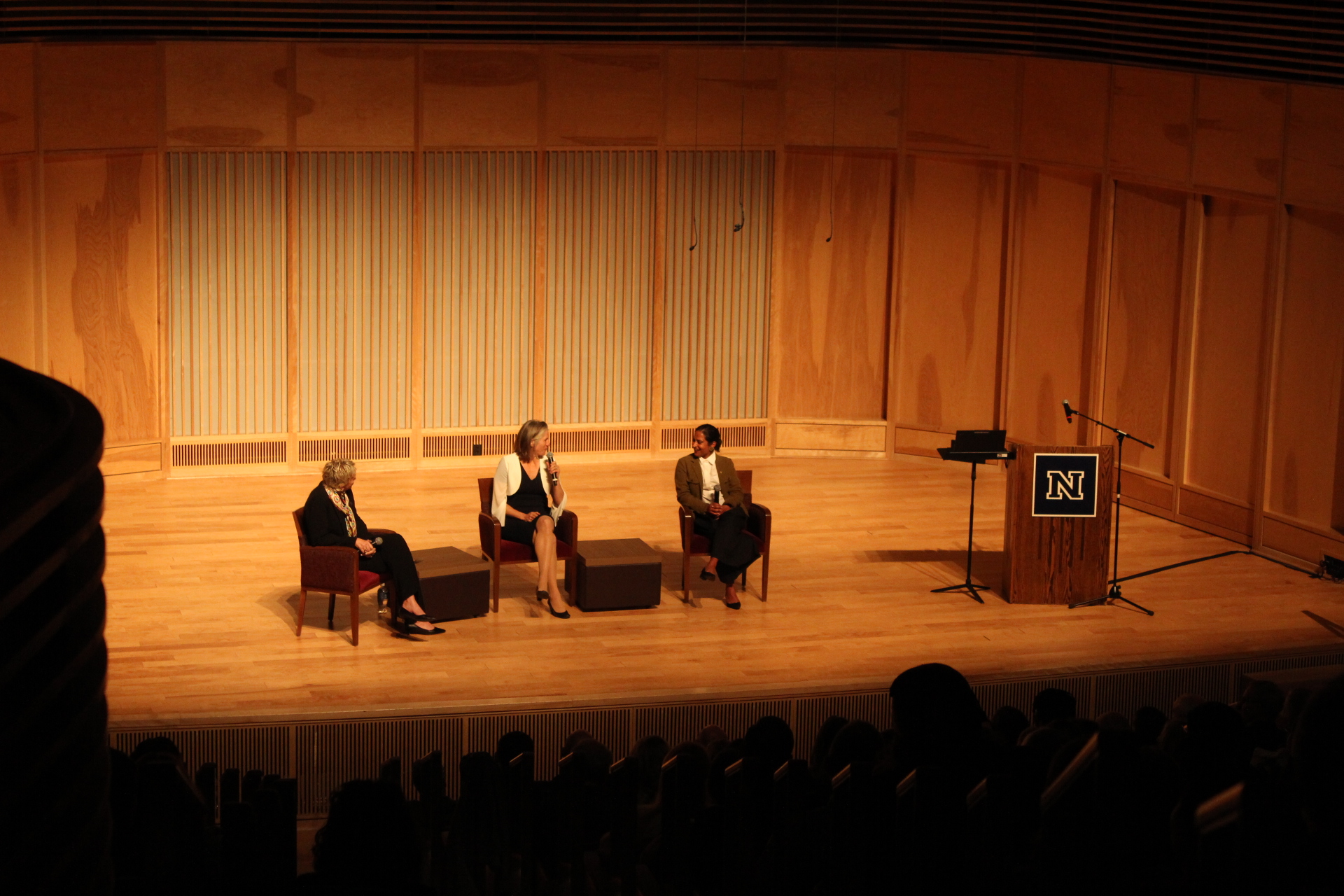

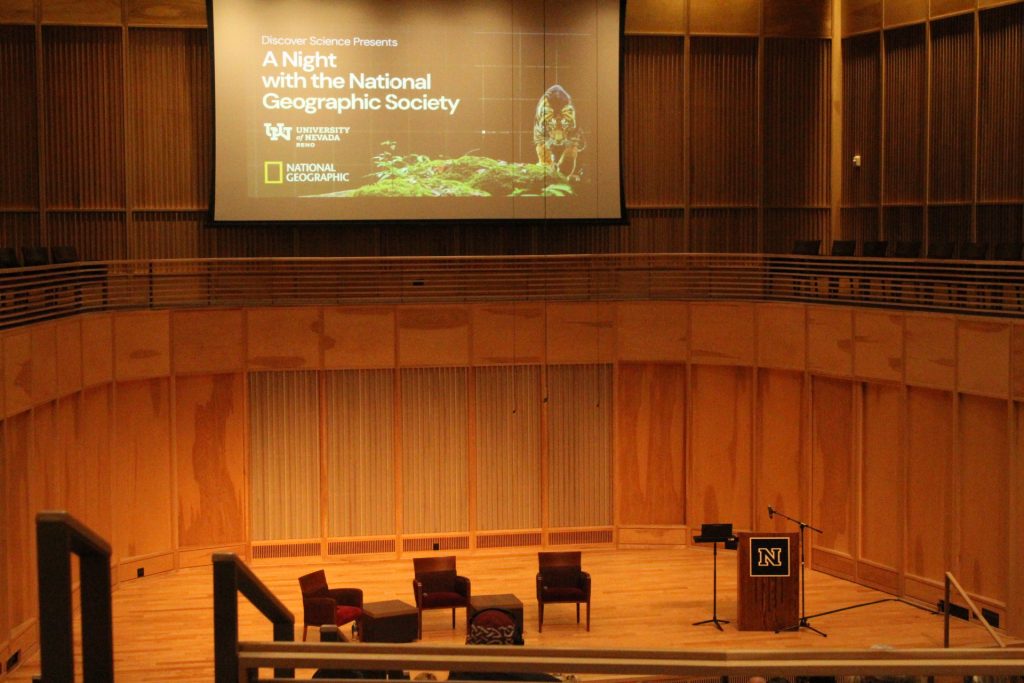
On November 12th, after hours, the University of Nevada, Reno’s (UNR) College of Liberal Arts and College of Science hosted Dr. Jill Tiefenthaler, CEO of The National Geographic Society, along with members of UNR’s faculty at Harlan O. & Barbara R. Hall Recital Hall.
The National Geographic Society, founded in 1888, has a long history of innovative research. From the top of Everest to the deepest parts of our oceans, their team searches for the unknown while pushing for scientific progress.
The lecture explored how complicated science and compelling storytelling work in harmony, while hinting to the community at a new chapter between UNR and The National Geographic Society.
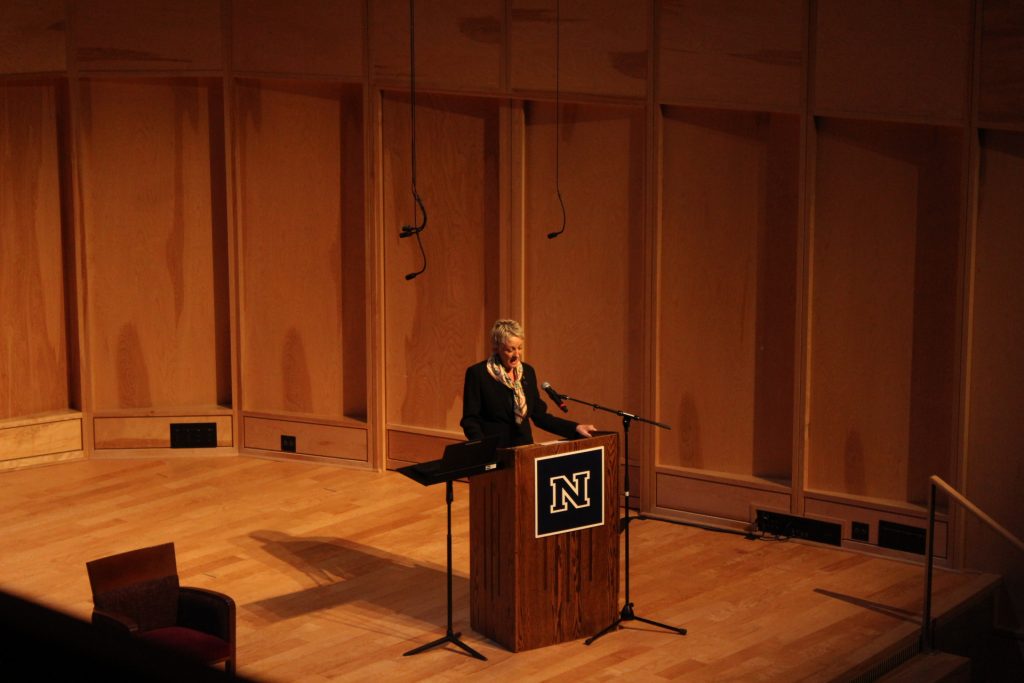
Tiefenthaler, who holds a Ph.D. in economics, spent 30 years in higher education before becoming the CEO of one of the most well-known scientific organizations in the world. She took the stage at UNR with pride and hope for the future of The National Geographic community.
“Certainly on a college campus, you understand that education and storytelling are valuable in their own right. But at their best, they inspire people,” Tiefenthaler said.
National Geographic refers to their researchers as explorers. Tiefenthaler calls them her organization’s “secret sauce” for worldwide influence and innovation. From Jane Goodall to Jean Cousteau, along with multiple UNR faculty members, these scientists inform the public and seek answers to the biggest questions we have today.
Through multiple featured projects, Tiefenthaler showcased 3,000 explorers across 140 countries, connecting them with resources to help their work reach beyond geographical limits.
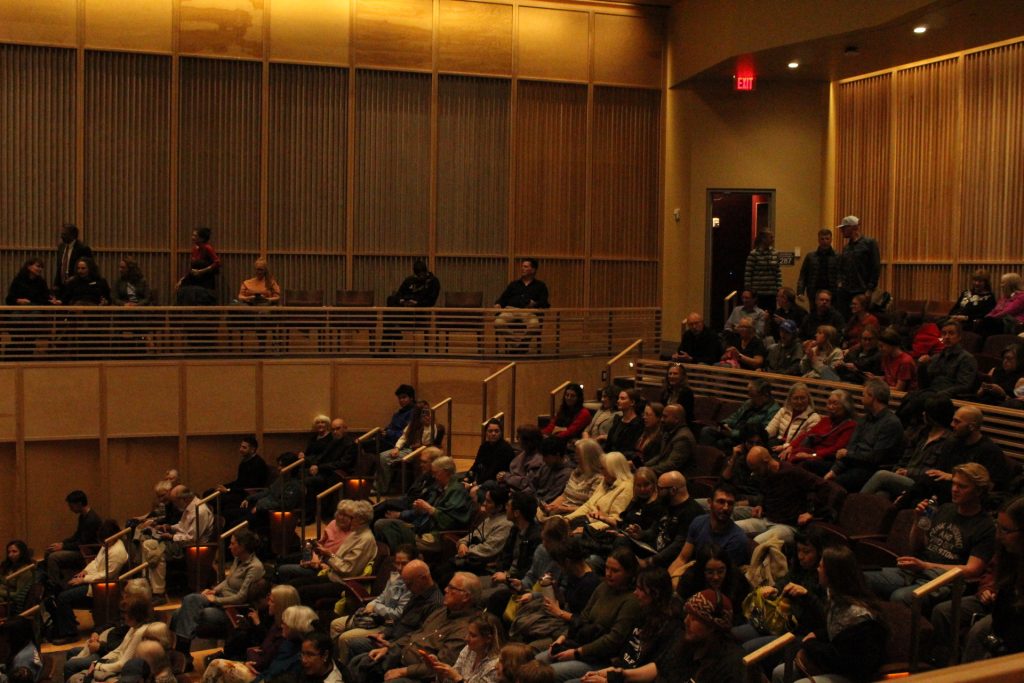
“Together, they [our explorers] show what’s possible when knowledge moves beyond the lab, field or the research, and reaches people who can help drive impacts,” Tiefenthaler said. “That’s the opportunity. The challenges facing our world are too big for any one discipline, institution or individual to solve alone. They call for us to work together, asking better questions, sharing what we learn, and turning knowledge into action…. The future of the world we share depends not only on what we uncover, but on what we do with what we learn.”
Jeff Thompson, executive vice president and provost at UNR, announced that earlier in the evening, UNR and The National Geographic Society signed a memorandum of agreement formalizing the collaboration already underway between the society and the University’s faculty. He didn’t share further details about what this means.
“This partnership reflects the alignment between two institutions that believe deeply in the power of discovery, education, communication and engagement,” Thompson said.
It’s an exciting framework for exploring new opportunities to connect our students, faculty and research programs with The National Geographic Society and its global network of scientists and storytellers.”
When asked about the significance of this agreement and what it means to UNR, student Ludvino Cano replied, “I think that’s the vision for National Geographic. It is to share knowledge and explore. This partnership will build a lot of capacity for students in general, and bring attention to the University, which is something that we want. There are so many hidden talents that will be brought to light through this opportunity.”
Charlotte MacKeller, vice president of land and wildlife at National Geographic, said, “There is a lot of potential for collaboration between The National Geographic Society and UNR. We have a lot of aligned values, which I find very refreshing. Caring about exploration, discovery, illumination, but also the storytelling part, really brings our two organizations together.”
Students and staff can expect to see and hear more about this collaboration in upcoming months, according to Thompson.
Tiefenthaler closed by saying, “We believe science and conversation are essential. Since 1888, we’ve also understood the power of sharing that work with the world. Because, when we bring discovery to life through storytelling, we can move hearts and minds, change perspectives, and bring more people along to create a better plan for the future of our planet and everyone who calls it home.”