
The University of Nevada, Reno’s Student Galleries South at the Jot Travis Building hosted a reception for an art exhibition of students’ work titled “Traces Of” on Nov 17. The exhibition artist statement began with, “What remains of the dead, the forgotten, and the erased?”
The advanced studio group exhibition, open to visitors from Nov. 11 to Nov. 19, featured artwork from four UNR students and touched upon themes of life and death, gratitude and regret, and community and loneliness – all elements from their own lives, showcased through a wide variety of paintings, sculptures, installations and photographs.
Aubree Dreyer, one of the student artists with pieces showcased in the collection, included photographs in her installation that can be interpreted as “Ghosts of the Past”, although they look more theatrical than spooky. Heavily inspired by the ‘40s and ‘50s illustrations of pinup girls that Dreyer grew up with in her mother’s home, she portrays a satirical, feminist spin on the vintage imagery through her art.
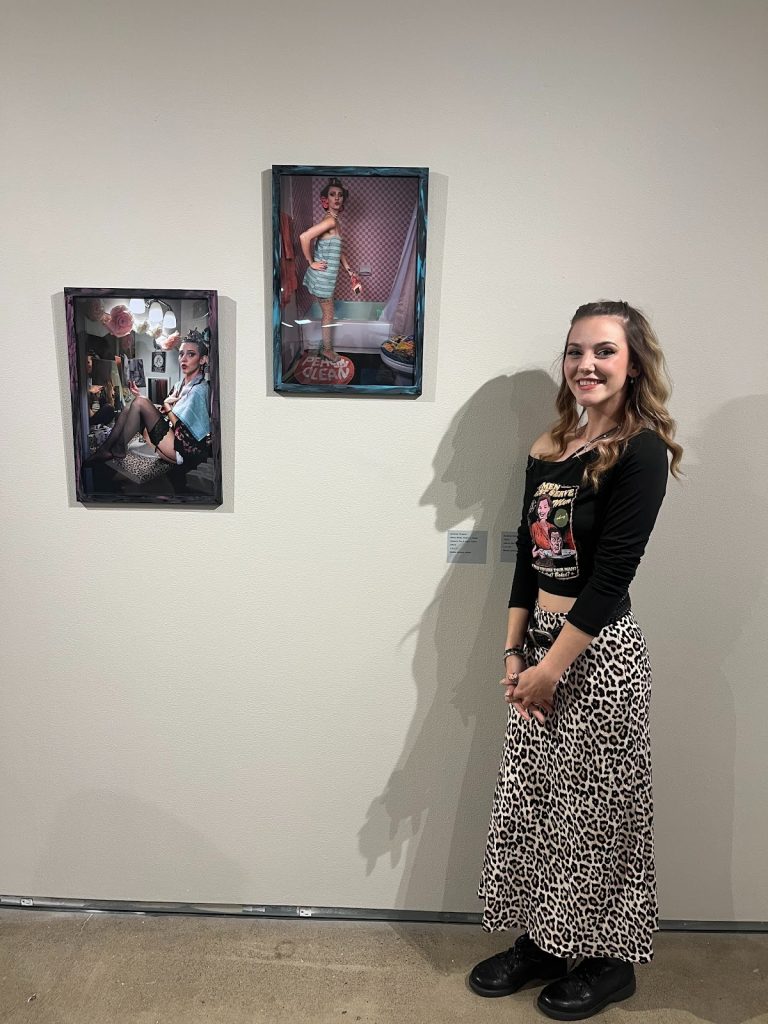
The entirety of Dreyer’s collection was shot in her apartment, transforming it into a retro abode of teals and pinks. Many of the props are authentically vintage, with magazines that Dreyer had sourced from her mother and great-grandfather that date as far back as the 1930s.
Her work focuses on her response to the misogynistic and oppressive phrases that are common in the modern age, such as “You Should Smile More” and “She’ll Talk Your Ear Off”, the titles of two of her pieces.
Sexist illustrations in the past have been used to push women into suffocating standards: obeying men, taking care of the home and being nothing more than a subservient wife. In Dreyer’s collection, she aims to shatter stereotypes in a vibrant, extravagant showcase of carefree feminism.
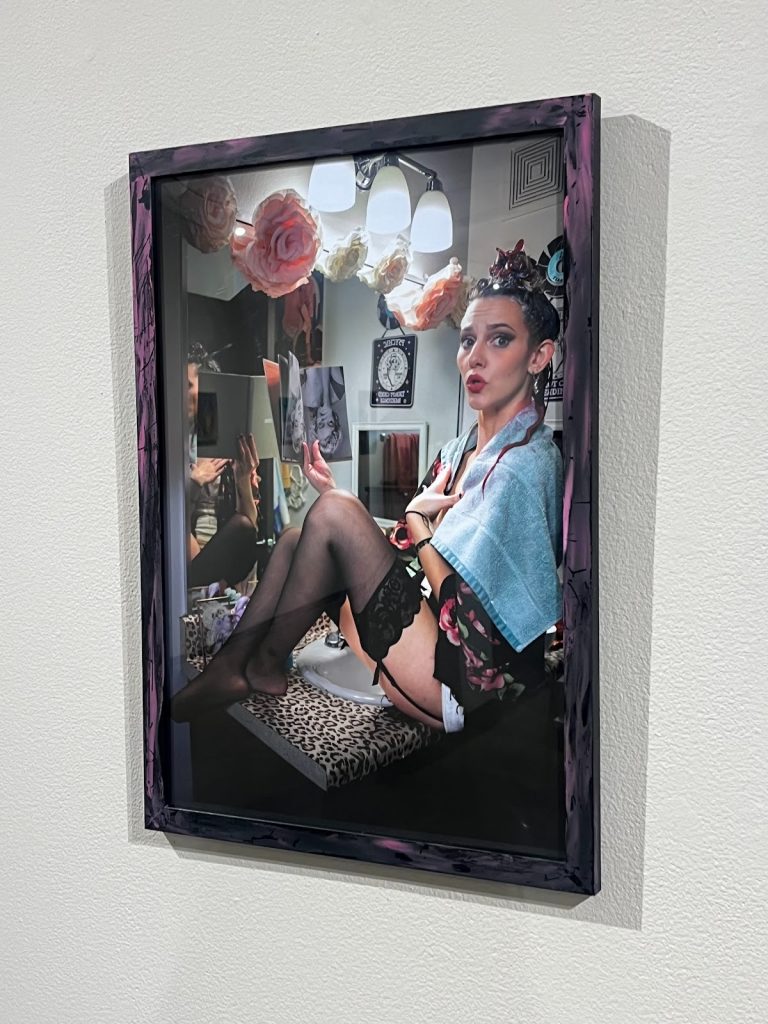
These pieces in particular are titled, “Wow, Pink, That’s A Bold Choice For A Hair Color” and “You’re so Dramatic.” Dreyer describes how women are looked down upon for altering their appearance in ways that traverse outside of society’s norm, such as dramatic hair colors. She also reflects on her past experiences of receiving unsolicited comments that put her down.
“This series is my way of reclaiming these notions that were used towards me in a not-so-kind manner,” Dreyer shares in her artist statement, “I am emotional and dramatic, but I think all the best artists are.”
Alysa Fonken, another student artist within the exhibition crafted a journey with her works, told through miniature sculptures, “Foundation” to “Building” to “Neighborhoods,” that portray how she has built a little life bit by bit.
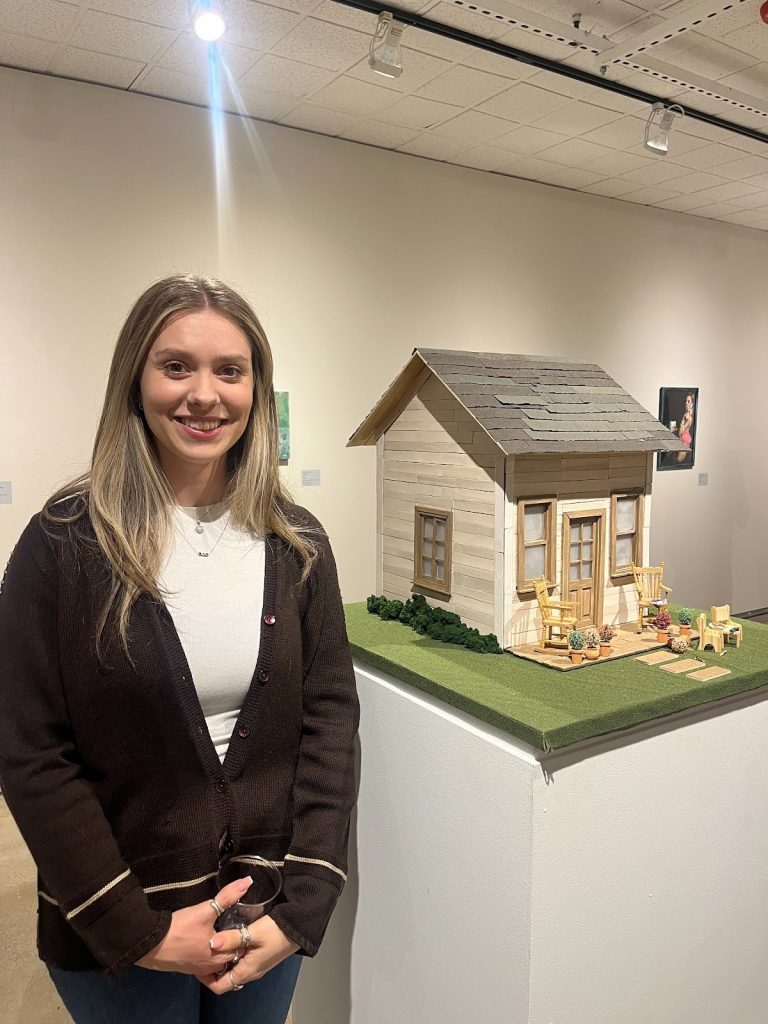
Constructing miniature works of art has been a personal hobby of Fonken’s, and she dedicated her time to make a multitude of models as she weaved a tale into her creations. As Fonken approaches her last semester at UNR, thoughts of life after graduating have begun to seep into her mind.
“I became obsessed with the idea of the process behind building a life and the creation of the spaces inhabited everyday,” she said.
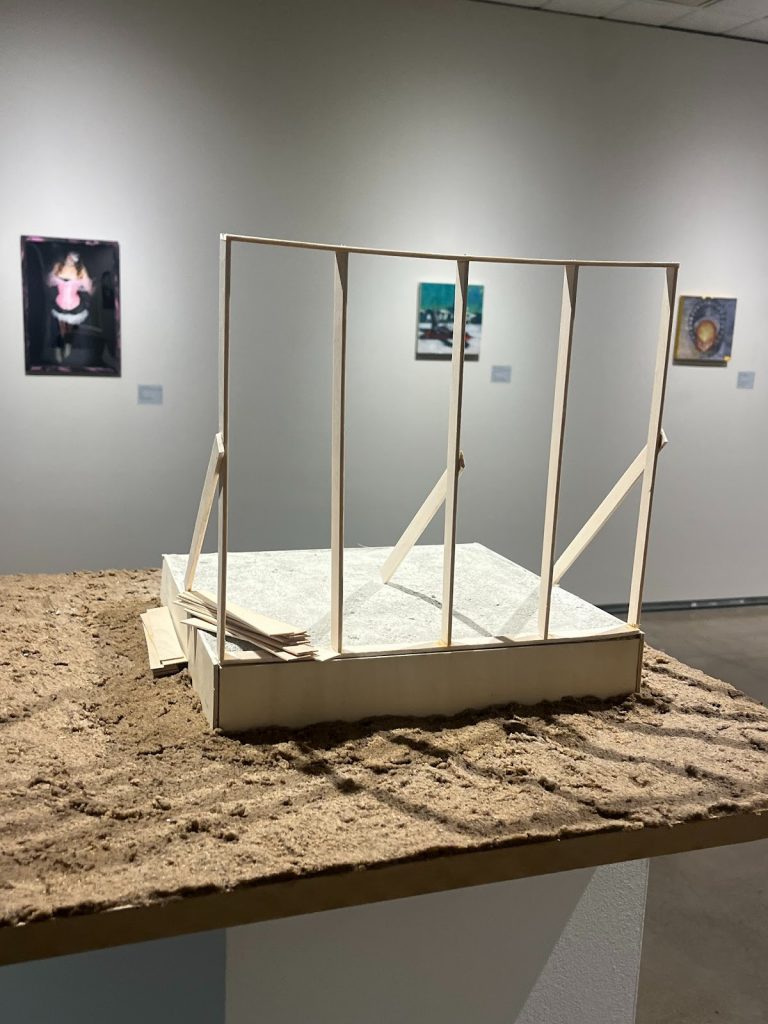
She started out with “Foundations”, a simplistic structure of pillars that laid out the first steps of the life she aspires to lead: a home full of family. “Building” is a representation of Fonken’s current life. The art piece appears to be a picture of perfection, but a closer inspection reveals imperfections and flaws such as misaligned planks, cracked windows and a shattered pot.
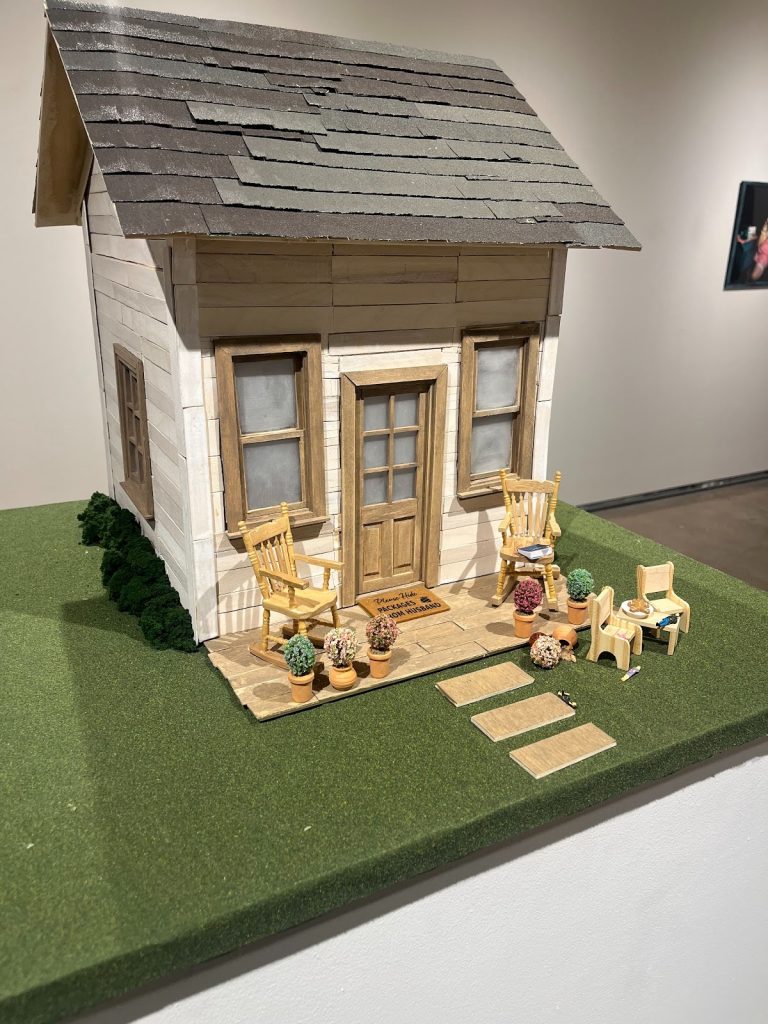
“I think my life is very not-perfect right now,” Fonken explains, “It’s not always put together properly.”
What many people envision for their futures is a perfect life with a green lawn and a lovely home, but there is beauty to be found within the cracks of perfection that reveal the true authenticity and nature of humanity.
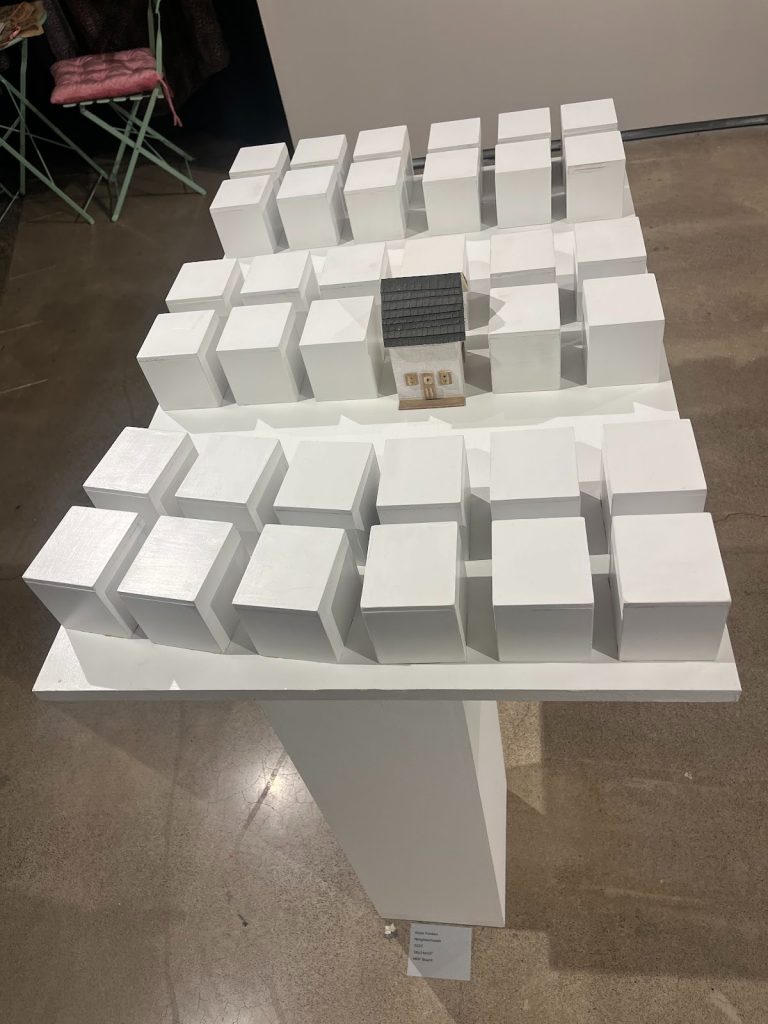
Within one’s home is comfort and security, but what lies outside of it?
“Neighborhood” represents Fonken’s realization that the outside world is much bigger than one realizes– an endless world of discoveries. An idealistic home sits within rows of identical blank blocks to portray the idea that as an individual household, they are simply minuscule in comparison to the vastness of life.
In her pieces, student artist Tessa Ladd created a story reminiscent of nostalgia and haunting fairytales, including themes of the afterlife and mortality beyond a physical body. Her collection “explore[s] the concept of ghosts and the separation between our living bodies and our souls.”
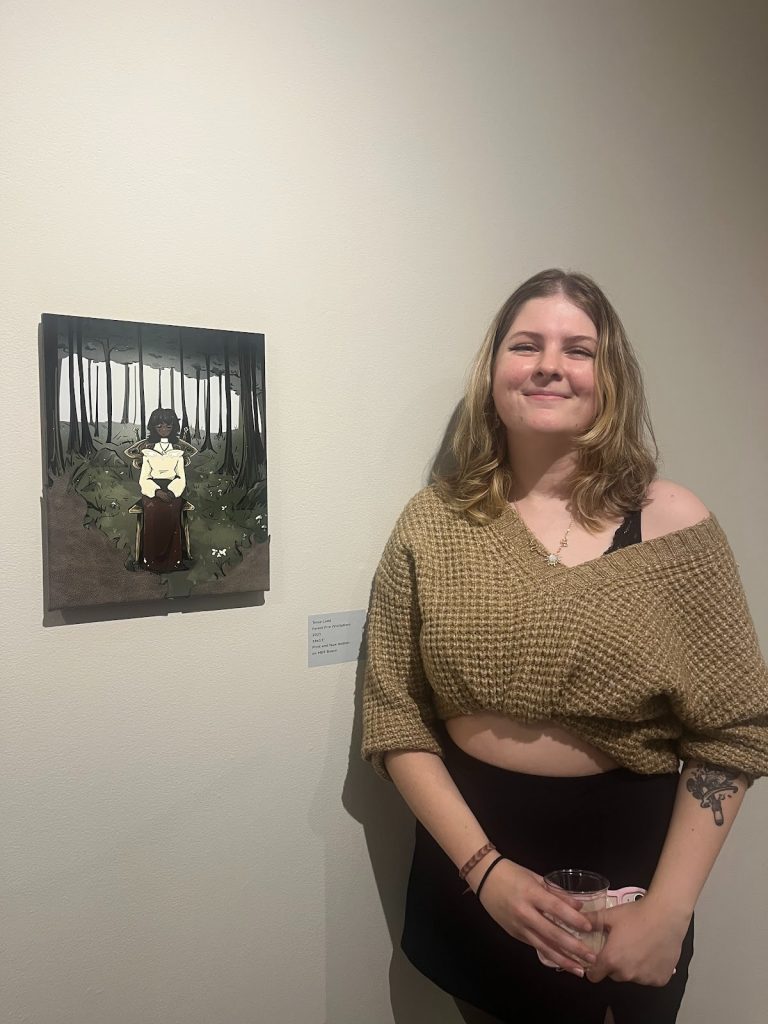
According to Ladd, ghosts are not only terrifying apparitions, but unshakable memories of the places we have been and the people we have known.
Ladd’s art style is imbued with a yearning warmth resembling children’s tales, pure and innocent but with a dark element behind it. People look back upon those who have passed with loss and longing, but also with heartfelt memories laying resonant within their soul.
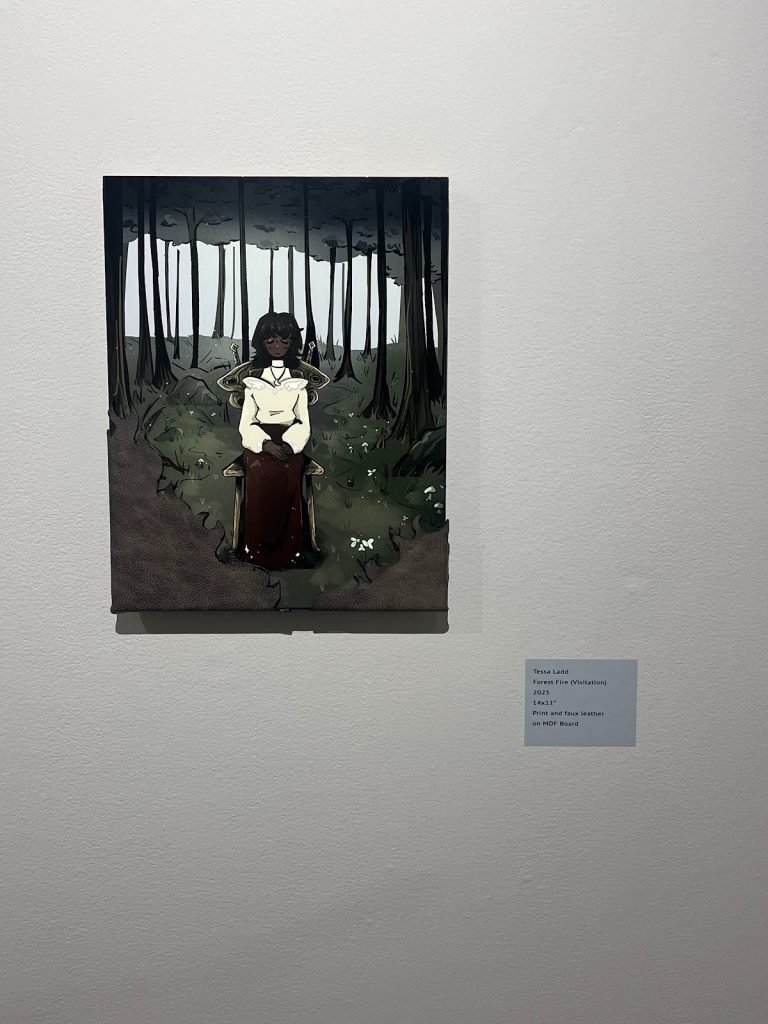
Ladd shares how “Forest Fire (Visitation)” comes from the act of inviting spirits. When thinking about the presence of ghosts within nature, the practice of hosting seances in a calm, meditative space entered Ladd’s mind. The illustration was also developed from her own desire to see a spirit. The material of the flames is from the leather jacket of Ladd’s late uncle. He was a firefighter, which influenced the piece’s use of flames to symbolize the essence of a soul. “Forest Fire” depicts welcoming a spirit, and it is this art piece that welcomes the spirit of her uncle.
Visual abstractions reflect student artist Matthew Gavrille’s experience as a queer and neurodivergent individual, portraying a realm of illusory surrealism. His art revolves around “gender binaries, neurotypical social expectations, losing and regaining childhood, attention, and queer sexuality,” as is included in his artist statement. Each piece paints a narrative that develops with every detail.
“I create ghosts of clear images, and return focus to subjects lost under layers of material and information,” Gavrille said.
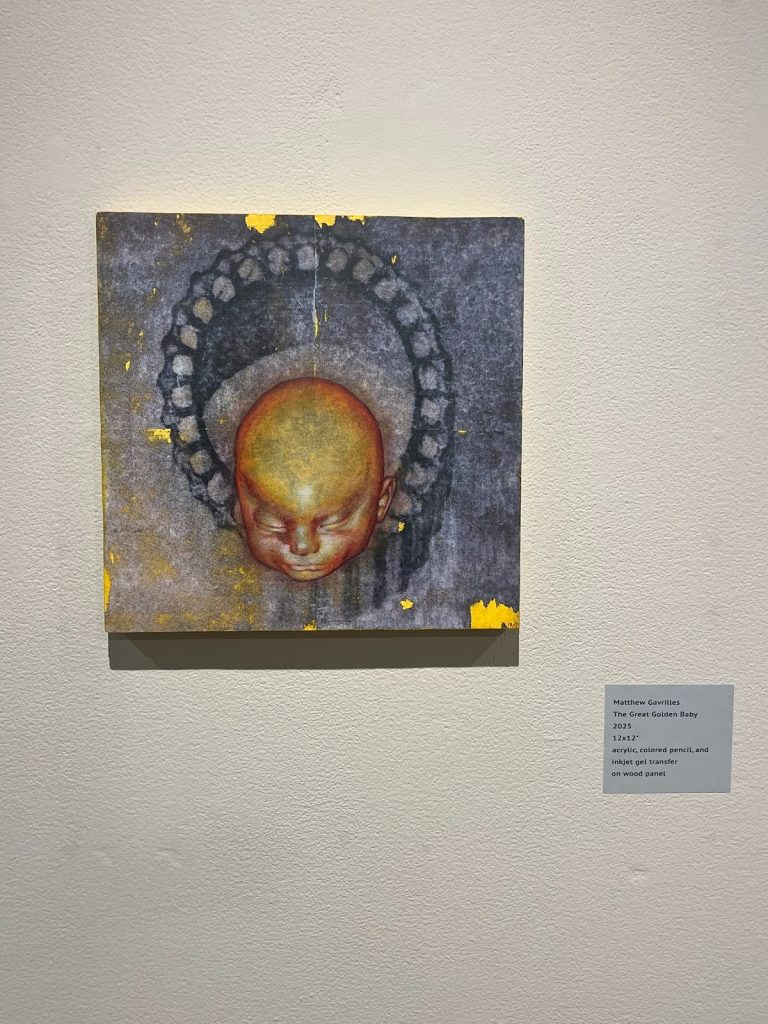
In “The Great Golden Baby”, they used a gel transfer technique to take a digital image and spread it out onto the flat surface of a wooden panel. It had first been scanned from a book about ant farms that caught Gavrille’s eye. They desired to combine it with a visceral image of the “Great Golden Baby.”
The essence of early social internet spaces and digital collage is juxtaposed against the traditional detail of hand-drawn works of art, allowing viewers to be transfixed among Gavrille’s hazy imagery.
The diverse art of the “Traces Of” exhibition invited people to transcend beyond the world as they know it. The four UNR artists presented an opportunity to reflect on the past and the future – and question life, death and everything in between.
