
Bad Bunny sent a solidifying message to audiences, cementing his place in Super Bowl history, despite facing controversy when he was announced as the halftime performer. In light of recent sociopolitical tensions rising in the United States, Bad Bunny remained consistent in his activism for cultural pride and Puerto Rican autonomy. His Super Bowl performance was highly anticipated across the country, leaving people wondering how he would address the current political climate through music.
Throughout the performance, Bad Bunny immersed audiences in a rich Puerto Rican cultural scene. Visuals of tall sugar cane grass and coconut carts flooded the screen as he sang one of his most popular songs, “Tití Me Preguntó.” He showed different aspects of the Puerto Rican lifestyle, including women getting their nails done, men selling street tacos and boxing.
An interesting detail to note was the commitment to dressing the performers in either Puerto Rican clothing or patriotic colors. Audiences saw examples of various cultural dress as well as a collaboration between Puerto Rico and the United States’ significant colors.
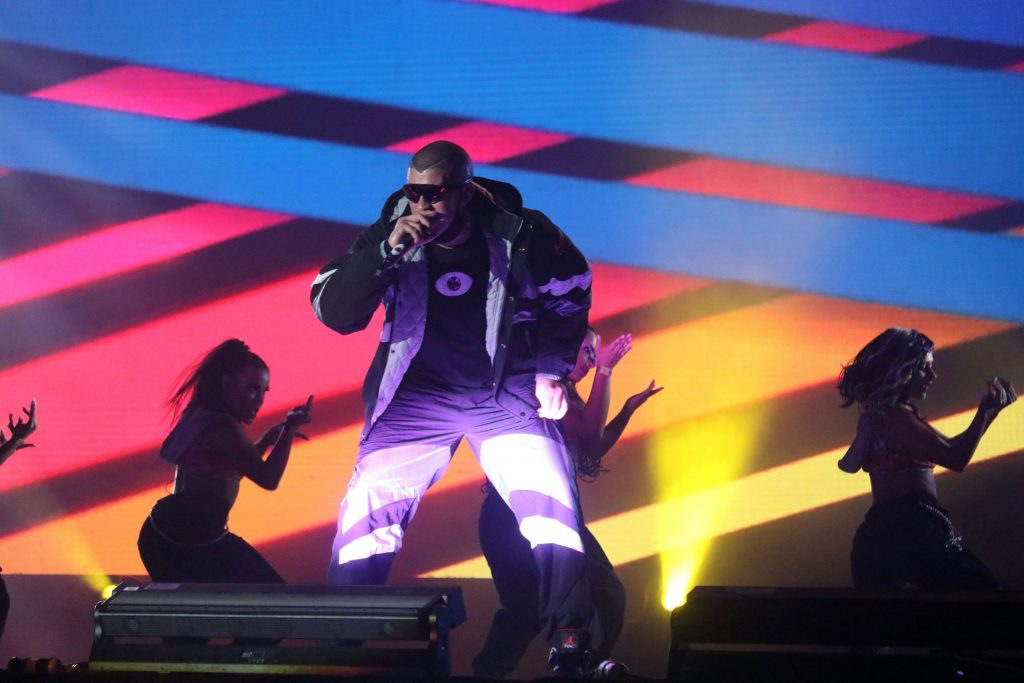
The energy of the performance shot through the roof from his opening line. Bad Bunny focused much of his musical effort on hiring live musicians, highlighting the importance of Puerto Rican talent, and tying in Latin American music culture.
Bad Bunny displayed a diverse range of performers throughout the show, stressing the necessity for diversity and inclusion and shedding light on a culture not always discussed or represented well in the media. The deeply rooted parts of Puerto Rican heritage received their time to shine on possibly the biggest stage of the year.
Bad Bunny walked viewers through a story of love and unity, with the first scene showcasing the love of a community; Latin Americans connected with each other through dance and song. The next featured a marriage ceremony (which was real, if you didn’t know) — a public display of love and commitment between two individuals. Shortly after, Bad Bunny incorporated a family into the performance, highlighting the blend of two families and their love through unity.
In another scene, Bad Bunny passed a Grammy award to a child watching his recent Grammy acceptance speech, likely attempting to represent either himself or the next generation of Latin American children. However you choose to interpret the action, it was a touching moment amidst the regular hustle and bustle of the performance.
The Super Bowl performance featured several celebrity guest appearances, including Lady Gaga who sang a salsa-style version of “Die With a Smile,” a song originally performed by her and Bruno Mars. Ricky Martin, another Puerto Rican artist, also joined the halftime show, covering one of Bad Bunny’s songs, “Lo Que Le Pasó a Hawaii,” speaking to the Hawaiian and Puerto Rican communities directly.
“Lo Que Le Pasó a Hawaii” mentions the history of Hawaii and its relationship with the U.S., but interpreters argue the lyrics urge Puerto Ricans to hold on to their traditions and stresses the importance of not allowing the United States to push Puerto Rico to assimilate as they did with native Hawaiians.
Bad Bunny’s stage presence was creative to say the least. He climbed electric poles, danced on cars and walked through houses and markets. He took advantage of every platform and varying levels of his stage set, making visuals more interesting to the audience in the stadium and to the audience watching at home.
The final segment of the performance featured a shoutout to the entire Latin American community. Bad Bunny proudly displayed the Puerto Rican flag, then brought out additional flags from various Latin American countries. He signed off by shouting “God Bless America” and calling out the names of all Latin American countries, Canada and the Caribbean nations.
The final scene included a shot of Bad Bunny holding a football with “Together, we are America” written across its face and a celebratory block party with all of his performers that soon followed him off the field.
The powerful performance stuck with crowds long after it ended; the performance is still a hot topic across social media platforms days after Super Bowl Sunday. Bad Bunny has a history of speaking up for his community, so it is no surprise he used the most watched show of the year to send a message.
His final display fired a signal of strength, persistence and resistance in light of high tensions regarding the current political climate in the United States. Bad Bunny celebrated his heritage and culture while including his fellow Latin Americans in the mix, delivering a spirit of inclusion, unity and love. His performance encourages audiences to practice the same values and to be proud of where they came from.
