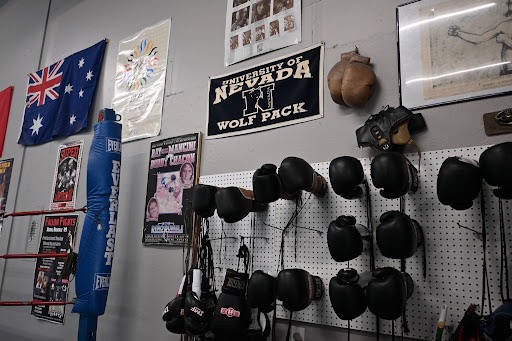

Nevada boxing in its prime stood as one of the most respected sports at the University of Nevada, Reno, producing Olympic-level boxers, winning titles and growing rapidly.
In 1960, the National Collegiate Athletic Association (NCAA) dropped the sponsorship of boxing due to safety concerns following the death of Wisconsin student boxer Charlie Mohr.
Now, functioning solely as a club through the University’s recreation center, UNR boxing still works to produce high-level boxers even after loss of recognition.
The Rise
Established in 1928 as an NCAA program, Nevada boxing quickly sprang into its prime between the early 1930s and 1960s. Six members from that time went on to be inducted into the Nevada Athletics Hall of Fame.
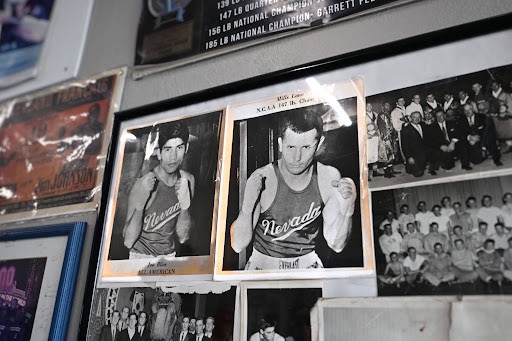
Nevada’s rich boxing history started with Joe Bliss, whom the University named as “Nevada’s first great boxer.” The Nevada native out of Lovelock and citizen of the Paiute Nation won the University its first NCAA boxing title in 1959 and was named Outstanding Sportsman of the tournament in 1960.
Bliss’ story prior to boxing at Nevada is one of humble roots as he grew up in a city of just over 2,800 residents. He started boxing as early as the third grade at Carson City’s now-closed Stewart Indian School and played five sports in his years at Pershing County High School.
Bliss spent two years in Germany after high school when he was drafted into the U.S Army during the Korean War. There, he continued to box, but it wasn’t until he came to UNR that the 5-foot-6-inch powerhouse found his full potential in the sport.
Bliss took three trips to nationals during his time boxing at Nevada, going 1-2 as he fought in the 139lb class. He won the University’s first national title in 1959 at the home Virginia Street Gym, which held the national tournament that year.
After college, Bliss went on to compete in the Olympic boxing qualifiers, making it as far as the semifinals before getting struck by a head butt forced him to withdraw. Thanks to his many achievements at Nevada, Bliss was inducted into the Nevada Athletics Hall of Fame in 1973 for boxing.
“Joe was a father first and foremost and loved his family,” Bliss’ children wrote in his 2020 obituary. “He had many accomplishments throughout his lifetime.”
Dough Byington spent his career for the Wolf Pack undefeated (1950-1953). Fighting to a draw in a national championship and defeating a UCAL opponent with a one-minute knockout got Byington inducted into the Nevada Athletics Hall of Fame in 1978.
Ted Contri, who fought from 1954-1956, experienced only five career losses and was honored as Athlete of the Year in 1955. He was inducted in 1979.
Sam Macias led Nevada to three Pacific Coast Intercollegiate championships and held a 39-4 record at Nevada in his four years competing (1953-1956). Post-college, he boxed in the Army to win eight Army and All-Korean championships. Macias was inducted in 1975.
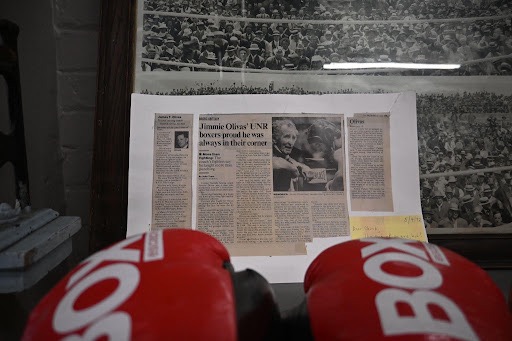
Jim Olivas boxed in 1929-1931, going undefeated in his last two years. He returned to Nevada in 1950, where he coached boxing until 1985. The Jimmy Olivas Foundation is the current sponsor of UNR Boxing.
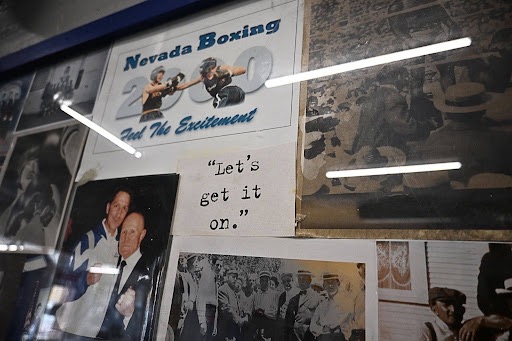
Mills Lane competed at Nevada the last year boxing was sponsored by the NCAA. He went on to win the last NCAA national championship and was named Nevada’s Athlete of the Year in 1960.
Lane’s boxing journey started when he read a Nevada Boxing article while he was in the Marines.Despite being from Savannah, Ga., he made the decision to move to Reno after getting out of the Marines.
Lane immediately stood out as a top boxer at Nevada, and won the last NCAA title for Nevada before boxing was dropped as an NCAA sponsored sport. He also had an accomplished boxing career outside of Nevada, with a 45-5 amateur record and a 10-1 professional record.
While being successful in his boxing career, the true fame around the name ‘Mills Lane’ came from his career as a professional boxing referee. Coining the famous phrase “Let’s get it on,” Lane became one of the most recognizable referees in boxing, trusted as the officiate of many top and famous matches.
From winning his own national title at Nevada to awarding a victory to Evander Holyfield after the 1997 match in which Mike Tyson bit his ear, Lane’s successes in boxing led him to be inducted in the Nevada Athletics Hall of Fame in 1974.
The Fall
The dropped sponsorship of boxing by the NCAA in 1960 seemed to be abruptly caused by the death of 22-year-old boxer Mohr, but according to former Nevada boxer and current UNR boxing coach Mike Martino, there had been problems before that.
“When the NCAA decided to do away with boxing, it wasn’t just [because of] the death,” Martino said. “They [the NCAA] were having trouble policing schools. Some schools would get scholarships, others wouldn’t.”
The inconsistency in scholarships across schools led to a talent imbalance as athletes could be recruited on scholarship.
The overall popularity of college boxing fell as the NCAA sponsorship ended; however, many programs continued competition. Nevada, along with multiple other schools on the West Coast, competed in the California Collegiate Boxing Association (CCBA).
Colleges across the East Coast competed as well in the East Coast Boxing Association (ECBA). In 1976, the two associations came together to form the National Collegiate Boxing Association (NCBA) which is active today.
Nevada cut the funding of boxing after 1960, however coach Jimmie Olivas continued to be paid by the University until his retirement in 1985.
“So the main support we were getting from the University [after 1960] was the gym,” Martino said.
The Virginia Street Gym was the home of UNR boxing practices and competitions until 1987 when, for Title IX reasons, they were forced to relocate off campus.
Six more boxers from Nevada who competed after 1960 have been inducted in the Nevada Athletics Hall of Fame; however, the number of notable boxers and team successes fell since the early 1990s.
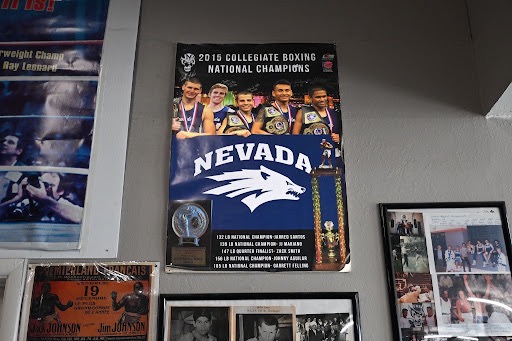
It wasn’t until 2015 that there was another breakthrough for Nevada boxing, when four of six members of the team won national championships in their weight divisions to contribute to a national title for Nevada. This was Nevada’s first team title since 1993.
Kirk Jackson, a 2017 Nevada graduate and boxer, competed at Nevada from 2013-2017. He was a part of the victorious 2015 team and won his own national title in 2016.
“I’d say, humbly speaking, when I went [to Nevada], that was probably our last golden era of boxing,” Jackson said.
Davis Ault was the last member of Nevada boxing to take home a national title in his 2019 victory. Martino identifies the main contributing factor of this victory drought as an effect of COVID-19.
Ault, who hadn’t previously boxed before coming to Nevada, credits his success in the program to his coaches and teammates like Jackson.
“Kirk was one of the guys that really helped me along the way,” Ault said. “He was a national champion as well and one of my earliest sparring partners.”
Ault’s last name has deep roots at Nevada: Ault’s grandfather Chris Ault is famously known for his many years coaching Nevada football and becoming the winningest coach in school history.
“He [Chris Ault] spent a lot of time up there [at Nevada] coaching and did great things for the university,” Ault said. “I always kind of knew I was going to go to the university, you know, being around it so much.”
Playing multiple sports throughout his high school career and having a family that made sports their life, Ault knew he would find himself in athletics at Nevada and wanted to do so in a way that was his own.
“I’m the only one in my family to box, to do anything like that,” Ault said. “So it was kind of creating my own identity and own name for myself in a different athletic sport.”
The Future
Nevada still has a fighting chance, and has proven that recently as boxer Nate Nicolas walked away from the 2026 nationals competition with silver in his weight class. Nicolas, one of two boxers who went to nationals this year, won back-to-back regional titles in 2025 and 2026.
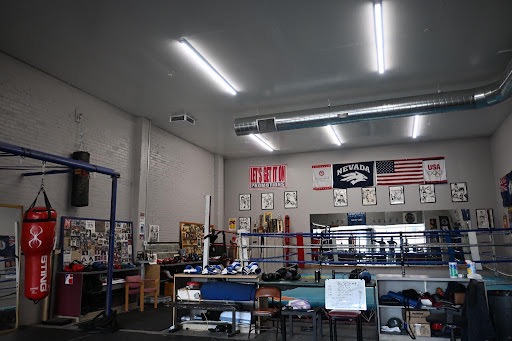
The community support built behind this Nevada team is the main propeller to their future. The team, now competing at the Eldorado Casino in Reno, draws a crowd.
“Our events are sold out at the Eldorado,” Martino said. “[There are] a lot of communities, we have a great turnout.”
The team has received a generous amount of donations from the community as well through fundraising and the Jimmie Olivas Foundation, named after the famous long-term head coach.
“There’s a thing called Battle Born beer,” Martino said. “They gave us a check for 2,500 bucks just last night.”
Local companies and members of the community recognize the rich culture behind Nevada boxing, and that support came as financial help when they hosted a fundraiser dinner at the Eldorado.
“We just raised $85,000.” Martino said. “We did one event and raised $85,000, one dinner.”
The need for dedicated coaches could be make-or-break for the future of Nevada boxing as well, as Ault credits his success in boxing to those who coached him.
“I think the biggest thing for Nevada boxing is having people that have boxed there come back and be a coach,” Ault said. “I think that kind of motivates the kids that are boxing still.”
As the program looks ahead to its future and growth, Kirk believes that it’s important for the young athletes in the program to lean on their teammates for support as much as they receive support from the community.
“If I didn’t have my teammates to learn from and to give me that additional motivation,” Kirk said. “I probably wouldn’t have accomplished what I did.”