



A commercial for sports betting app Novig featuring American actress Sydney Sweeney posing in lewd positions with sports equipment has sparked outrage on social media. The ad, released on Sept. 9, has garnered the attention of female athletes who claim that the ad is highly offensive to women in sports.
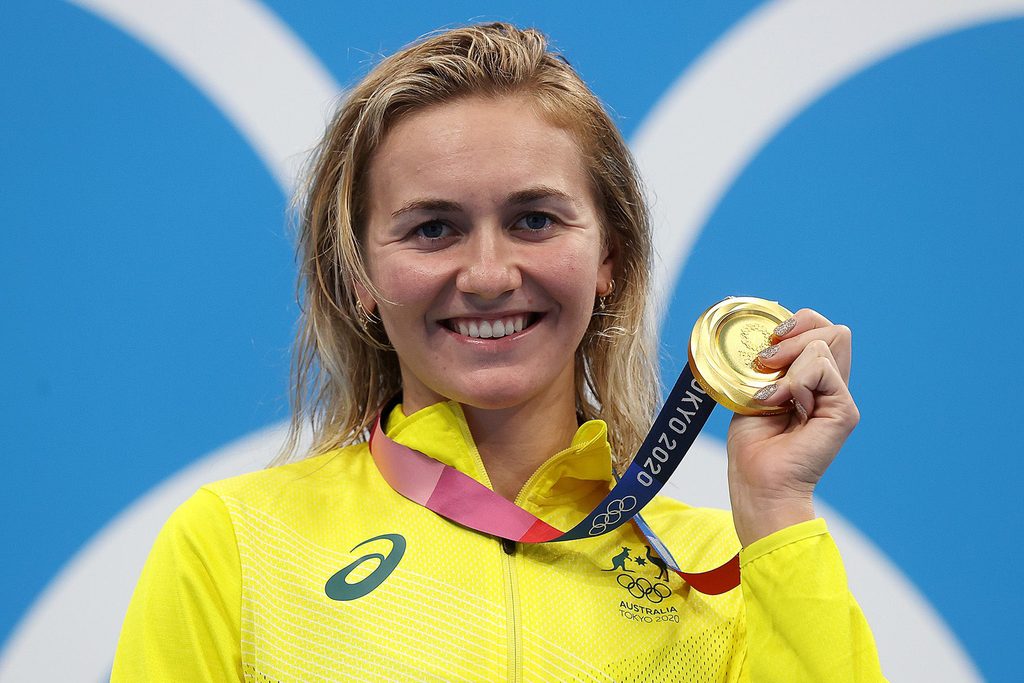
“Not only is this a kick in the face to every woman who has dedicated her life to perfecting her craft,” wrote Ariarne Titmus, an Australian Olympic champion and world record holder, on an Instagram Story, “but every woman who enjoys sports for what it really is — teamwork, friendship, dedication, excellence, unity… the list goes on.”
Titmus is one of many professional athletes participating in the “This is women in sports” trend in response to Sweeney’s campaign. In addition to professional athletes, amateur athletes are responding to the campaign with vitrail, including one sharing her experience with degradation in her sport career.
While the backlash is immense, there are many invalidating these responses. For every comment denouncing the commercial, there is another praising it. Comments on coverage of the controversy, such a Global News TMS report, claim the ad does not represent female sports and the criticism is mindless outrage from easily triggered viewers.
What these detractors fail to understand about the backlash is that while yes, Sweeney nor Novig claimed to be representing women playing sports, the needless, over-the-top sexualization of the ad aides the regression of the work female athletes have done towards equality for decades.
It’s no secret women have been undervalued in sports: female athletes struggle with gaps in pay and media coverage; female-dominated sports such as ballet, dance and cheer are mocked when referred to as sports; in women’s fitness in general, the physique of athletic women is constantly under scrutiny. Despite these struggles, women have seen great progress in the last decade. According to Nielsen, 2025 recorded 46 billion minutes in watch time for female sports, with several sports organizations from the WNBA to Little League Softball seeing record-breaking viewership and ratings. In 2022, the U.S. Women’s National Soccer Team scored an equal pay settlement with U.S. Soccer, and the achievements of young female Olympians such as Simone Biles and Alysa Liu are so incredible even non-sports fans know their names.
This progress, however, is exactly why the content in the Novig campaign is offensive beyond explicit imagery. The “male gaze” is the perception of women as passive sexual objects for men. It’s often noticed in fictional media and characters — which is its own discussion — but it can be detrimental when applied to real women. The content seen in the Novig commercial reinforces the idea of women being sex things, incapable of ambition and skill. In this case, being in relation to sports, it eliminates the idea of women championing sports, reducing them to accessories in the culture. Even on the lesser extreme, female talent can then be seen as incomparable to male talent due to a supposed difference in value, leading to the “inferior” line of thinking Bobby Riggs demonstrated when playing Billie Jean King. If a woman is merely a child bearer for man, her accomplishments can’t be celebrated because that is not what her gender is valued for.
Another aspect of the ad’s problematic nature is Sweeney’s involvement. She isn’t just the model in the ad; she is an equity holder in the company and initially created the idea for the campaign, writing on the company website, “The campaign was about embracing a fun idea…cut through the noise and put the focus entirely on sports.” Nudity was not needed for this point (especially since any age can view the ad on YouTube), and yet it was a decision put at the forefront of its creation by the focal woman. Many also recall the American Eagle eugenics advertisement controversy from last year, so this isn’t Sweeney’s first time experiencing consequence for her content either.
Her control over her own sexualization is not empowerment or liberation; rather, it further portrays women as passive in their objectification. As a woman, Sweeney is inherently knowledgeable on how sexualization has impacted her by simply existing in the medium in which it starts. Anyone can deduce that, but instead of using her power and experience to present herself in a positive or at least neutral light, she used her control to knowingly contribute to the male gaze for her own profit. And the rest of women suffer for it, because if Sydney Sweeney is so comfortable being “sexy,” then why are other women — women in sports in this context — so triggered by it?
American society is in an age of regression for women’s rights. Every other week we are hearing about a new bill that restricts female healthcare, a new misogynistic tweet from a man in power, or a new viral video of a woman being assaulted. Granted, one ad will not do more damage than, for example, Roe v. Wade did. But, dear reader, take a moment to think about how this ad opposes this attack on women. Furthermore, think about how the male gaze in other media — movies, books, TikToks — can in any way, shape, or form solely benefit women (and only women!).
Maybe then, you’ll see why Sydney Sweeney has peeved off the internet yet again.














Wow, this is a terrible take on the situation.