
As a Filipina American, I’ve seen how many other Filipino Americans take pride in their cultural identity and aren’t afraid to show it. While we do have the reputation of having large families, being competitive karaoke singers and all of our moms or titas being nurses, there’s more to being Filipino than that.
To learn more about our way of life (being diligent, yet finding laughter in everything), take a look at these movies, shows and books. After getting to know these essential materials in Filipino culture, I think you can proudly call yourself an “honorary Filipino.”
- “She’s Dating the Gangster”
One of the most beloved romcoms in Filipino cinematic history (and a movie that I’ve watched again and again with my own family), the 2014 film “She’s Dating the Gangster” can be seen as the OG Filipino version of “To All the Boys I’ve Loved Before.”
Taking place in the ‘90s, star student Athena receives spam messages from a stranger who doesn’t realize it’s the wrong number, begging her to take him back. Soon, she realizes the messenger is Kenji, the ill-mannered, skater boy delinquent and the most popular boy in school (the most unique trope in fiction, I know) who was dumped by his ex-girlfriend with the same name as her. After realizing who Athena is, Kenji has an idea: get his ex-girlfriend back by dating the new Athena. But as their fake relationship turns into something more, Athena comes face-to-face with a decision to choose her health or her love.
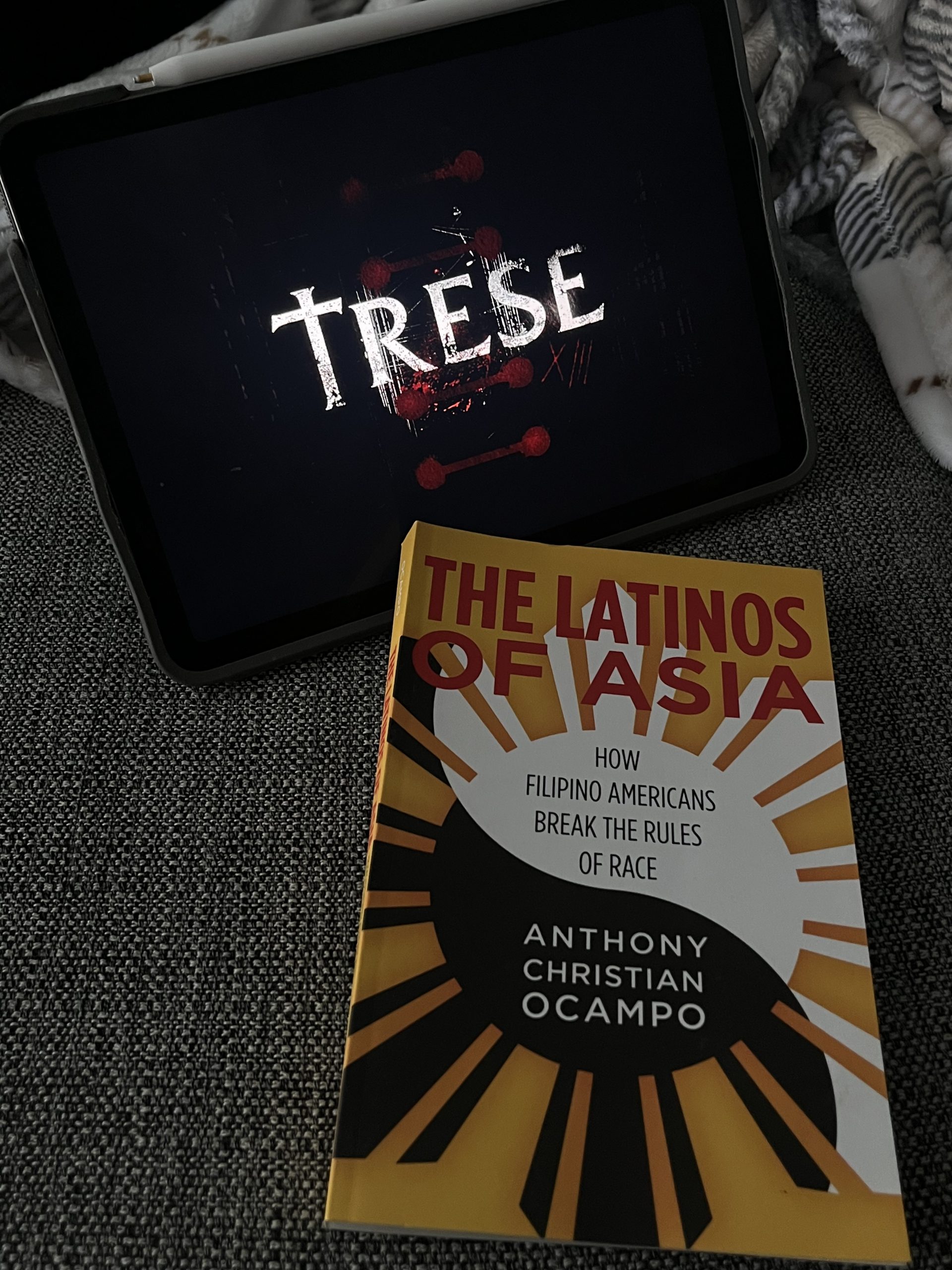
- “Trese”
Mixing the influences of anime with Filipino mythological folklore, this 2021 Netflix series takes place in modern-day Manila, fusing a detective drama with otherworldly entities.
Alexandra Trese, voiced by Liza Soberano in the Filipino dub and Shay Mitchell in the English dub, investigates crime and mysteries related to dark supernatural forces. She meets and fights creatures from Filipino legends, such as aswangs, the White Lady, kapre, duwende and more, as she uncovers secrets of the criminal underworld and from her own past.
- “The Latinos of Asia: How Filipino Americans Break the Rules of Race”
This non-fiction novel was praised as a “groundbreaking book about one of the least understood groups of people: Filipinos,” by Pulitzer Prize-winning journalist and author Jose Antonio Vargas.
Written by Anthony Christian Ocampo, “The Latinos of Asia” examines the complexity of Filipino identity and its relationship with Latino identity due to Spanish colonization. You might notice how some Filipinos have the last name “Lopez,” “Garcia,” or “Reyes,” or that some Tagalog phrases sound similar to Spanish, such as “Kamusta” and “Cómo estás?” This novel offers insight into Filipinos’ connection to other racial groups and how Filipino identities, especially Filipino Americans, have been influenced and changed by their surroundings in the U.S.
- Apo Hiking Society
After going from movies, to television, to books, now we’re jumping into Original Pilipino Music (OPM). OPM is the most well-known genre of music in the Philippines, pioneered by bands like Apo Hiking Society. Apo Hiking Society is celebrated as one of the most famous and earliest musicians in OPM. Their top songs are “When I Met You,” “Batang-Bata Ka Pa” and (my favorite) “Panalangin,” and are perfect for performing a harana to your loved one. The musical group was formed in 1969 by members Danny Javier, Jim Paredes and Boboy Garrovillo. After the death of Javier, Paredes and Garrovillo have continued performing to this day.
- “Forgotten Island”
The most recent Filipino piece of media in this list, the 2026 film “Forgotten Island” released just one month ago and can resonate in any Filipino’s heart. The film showcases our core values: family, friendship and culture.
The animated fantasy comedy centers around the characters Jo (voiced by H.E.R.) and Raissa (voiced by Liza Soberano), and takes place in the Philippines during the ‘90s. Jo and Raissa wake up in another world filled with magical creatures called Nakali Island, encountering Filipino myths such as the Manananggal, a were-aspin, a tiyanek, duwendes and more. Having lost their memories, they must get help from their new friends to return home.
Even if Filipinos don’t get a lot of representation, there’s still media out there that perfectly shows what it’s like to be Filipino. Our heart, our minds, our family, our friends, our laughter — everything that makes us who we are, we have to hold onto it deeply. As we recognize Filipino American History Month, these pieces of media remind us to be proud of who we are and to celebrate our culture and heritage.