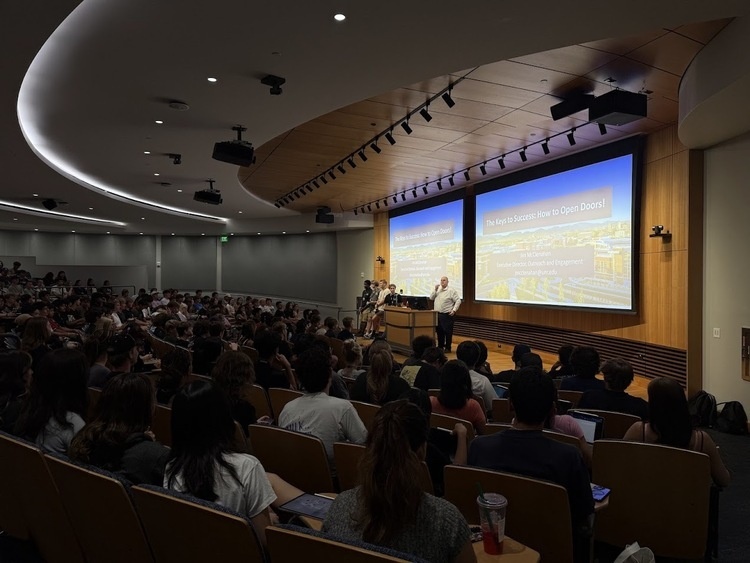

Participation is the backbone of education. It’s how questions get answered, new findings are discovered and inventions are made. However, it has never been more difficult to promote innovation due to the lack of participation exhibited by young students.
Although an overused excuse, the COVID-19 pandemic truly did change the way school works. For the most part, it has returned to how it was before the pandemic, but the one thing that has had a lasting impact is the decline in classroom participation.
Generation Z is known as the “loneliest generation,” which many blame technology for, due to it creating a false sense of connection with others through social media and causing a lack of in-person interaction overall. While social media is a massive contributor to loneliness, most of Gen Z lost that connection six years ago when schools told students they’d be getting a longer spring break, which developed into a year or more of social distancing and isolation.
But the pandemic isn’t solely to blame for Gen Z’s lack of extroversion in classrooms. Generative AI and Language Learning Models (LLMs) were unveiled right when students were struggling to get back into school after the pandemic. Although not caused by each other, there is a correlation between the pandemic, AI and the decrease in participation in classrooms.
In higher education, there has been a big concern regarding students’ use of AI, especially when it comes to how some students use it to complete assignments, which is in violation of academic standards at UNR. Similarly, UCS researchers found that many students use AI for the wrong reasons, which has led to them being pulled further away from classroom engagement.
“The researchers surveyed 1,000 U.S. college students and found that most use AI for what researchers call ‘executive help’ — seeking fast solutions with minimal effort,” according to the USC report. “In contrast, ‘instrumental help’ involves using AI to clarify concepts, build skills and support independent learning.”
Not all professors trust AI. Many see that there is still a good number of students who will use AI unethically, even with encouragement to use AI in a “positive” way. The College Board reported that over 84% of professors agree that AI reduces critical thinking and deep engagement with course materials, and 88% of professors are concerned with the overreliance on AI by students, which has led to many of them fully prohibiting the use of AI in their classrooms.
Professors can only do so much to further engage participation in the classroom, and although AI can be a useful tool, it is ultimately up to users how they want to use it. Although some professors are trying to lean into AI to help their students succeed, some have gone straight to the source of the struggles students face by adapting classroom policies that encourage students to utilize classroom resources before turning to AI.
Dr. Evan Brody, an associate professor in the Communication Studies Department in the College of Liberal Arts, has policies that he believes every student can find success with. In his policy, Brody not only defines the difference between participation and attendance, but he also offers multiple ways in which students can participate in less intimidating ways.
“Asking questions, thinking critically and offering ideas” are just some of the examples he gives to students on ways they can participate. In class, he also reminds students that asking questions is a way to get participation points because it shows him they are engaging with the material.
Brody has taken it a step further in adding a section allowing students to seek help and guidance when it comes to participation if they know it is something they will struggle with. This policy allows students who struggle with participation to seek out help from and collaborate with their professor to get the participation points required by the end of the semester in most classrooms.
Participation is a vital part of learning, and sending an email or Canvas message can’t replace the ideas developed through in-person conversations. When it comes to AI, many students have stopped participating in class because they know AI will answer their questions in a way they understand. This deemphasizes the importance of classroom conversation entirely.
The University of Waterloo found that in order to facilitate classroom conversation, students need to feel as though their participation is a contribution to a shared experience rather than an individualized call for help. When classrooms are used to create a collaborative environment rather than push for individual responsibility, students find that their peers share a lot in common with them, allowing communication to flow freely.
The Center for Teaching and Learning at Columbia mentions that in order for students to do their best, professors should create a “high-trust low-stress environment.” This is known to be one of the most inclusive ways to interact with students of all learning types because students feel a higher sense of belonging.
“[Students] feel heard and are comfortable asking questions, sharing ideas, and taking risks because they are told that mistakes are part of the learning process,” states the CTL website. “In a low-stress classroom environment, instructors show that they care about their students by setting clear expectations and accommodating course policies.”
Most participation policies are the same, and although participation is important, outdated syllabus policies don’t work with all personalities. However, some professors are trying their best to make changes and accommodations in their syllabi that better reflect modern technology and the needs of students, rather than implementing unreliable tools.
Allowing students to find their own comfortable way of participating in class will make learning more accessible to all students and decrease the fear many students have about participating.
Professors need to be aware that students, now more than ever, are more introverted, especially in the education setting. Although cliché, many students missed out on key classroom skills due to the pandemic, and with the rise of AI, they have found a solution in something that is harming their education more than helping it.
COVID, however, doesn’t give students a pass to avoid participating altogether. Although many people became less comfortable talking in large settings due to the lockdown, it is now time to get over that hill. At the end of the day, it is up to the students to make themselves successful academically, and participating is one of the best ways to ensure that success.
Participating in classroom discussion can be intimidating, but to facilitate learning, students have to be OK with putting themselves in an uncomfortable position. One main barrier students face in participating is the fear of being judged, being wrong or sounding unintelligent when asking a question or giving a response.
Beginning in childhood, the number one reason that students don’t participate is that they believe they will appear less smart compared to their peers if they are wrong and that others will judge them for their responses. According to Oxford Learning, students often feel that listening to the conversation is safer than asking a question, even when they are confused.
Public speaking is the number one fear in the world, so participation, being something that often causes anxiety, is not out of the ordinary, even for college students. It is important for students to not only be willing to listen to others when they try to participate, but to also have empathy when others participate as well.
If students allow mistakes to be made, just like professors do, participation will be more welcomed by others. Classrooms have always been the best place to ask questions and make mistakes, so students should understand that, although intimidating, no question is stupid. Everyone should be able to ask for clarification without the fear of being judged by others.
It’s not easy to be vulnerable, and most of the time, other people have the same question as the one being asked. Students should allow for grace in the classroom because, without mistakes, how will we learn?