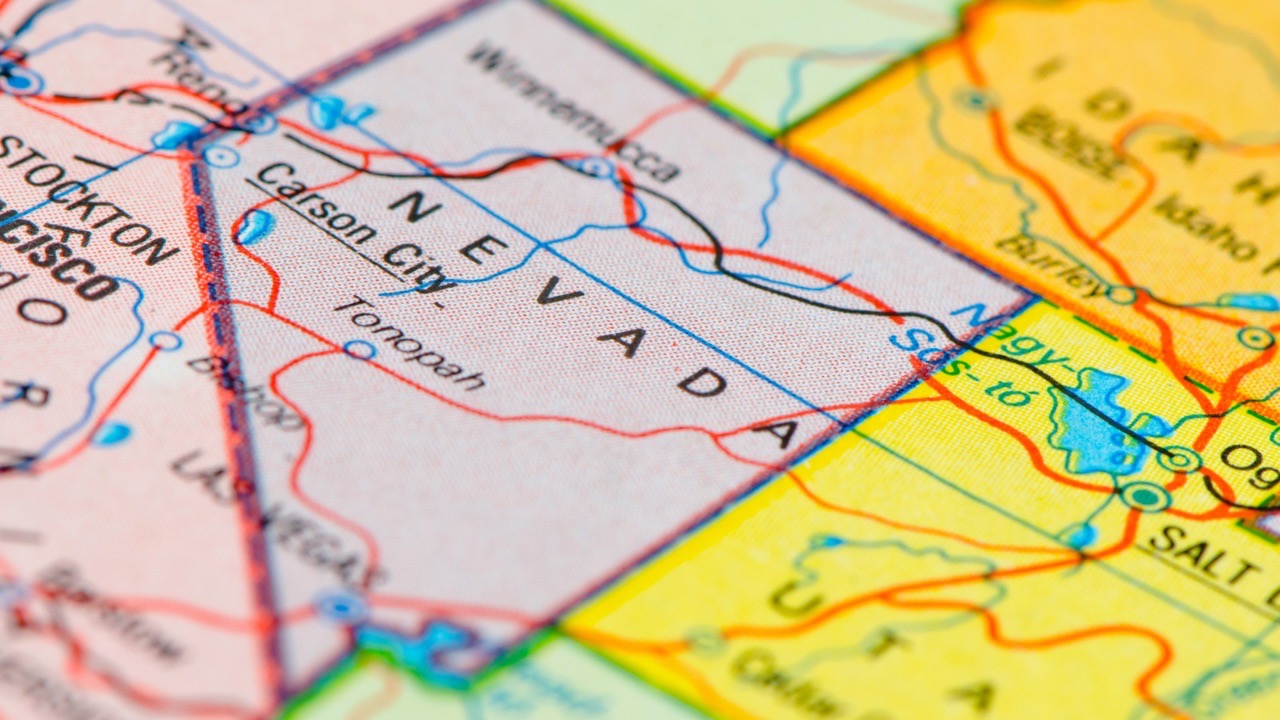

Nevada’s 2nd Congressional District is set to elect a new congressional representative this November for the first time in 15 years. This comes following the surprise retirement of longtime Rep. Mark Amodei (R-Nev.), who announced he would not seek reelection to a would-be ninth term in the House of Representatives in February.
At the heart of this wide-open race sits the University of Nevada, Reno (UNR). Students at Nevada’s flagship university have been uniquely affected by the prospect of a new representative.
“I would hope that any representative, Democrat or Republican, would recognize the importance of a strong research university to Northern Nevada,” said Eric Nystrom, a professor of history at UNR who specializes in Nevada and the West. “I would have every expectation that they would think that, right? [UNR is] one of the things that makes their district, you know, good.”
The University has seen a decrease in federal funding for research projects since President Donald Trump resumed office last January. Twenty-three projects have been defunded totaling over $35 million.
“The impacted projects span multiple disciplines and funding agencies, including the Centers for Disease Control and Prevention, National Institutes of Health, National Science Foundation, National Endowment for the Humanities, United States Department of Agriculture, United States Department of Education and the United States Agency for International Development,” UNR said in a previous statement about the funding cuts.
“Having somebody who understands the needs of the state, understands the capabilities that this university brings to solving the problems that the state encounters,” Nystrom said. “Those folks can be really valuable advocates for what we do here.”
The loss in research funding has not been the only thing impacting the University and its students, though; tuition has also continued to rise. The Nevada System of Higher Education (NSHE) announced a 12% increase in tuition over the next three years to go along with a 5% increase over the last academic year.
The estimated costs for an in-state student for the whole 2025–2026 academic year were $23,009 to $29,409, which increased to $24,167 to $30,767 according to data from UNR. Out-of-state tuition is set to increase as well.
“I just don’t want to pay more than I already am. I mean, college is such a [financial] burden for so many of us, and an increase in tuition is only going to make things worse,” Caden Allard, a fourth-year student at UNR said. “I really hope whoever our new representative is can help lower tuition or at least make paying for it easier. You don’t get the sense that a lot of people are truly working to make college less expensive.”
The fallout of Amodei’s bombshell announcement has been nothing short of chaotic, with numerous candidates jumping into the race on both the political right and left. The most notable candidate running to fill the open seat is Republican James Settelmeyer, who secured the endorsement of both Amodei and Gov. Joe Lombardo following former federal Senate candidate Sam Brown’s decision to not run for the seat. Brown opted to remain in his Trump-appointed position in Washington D.C.
Settelmeyer is no stranger to legislative politics, serving as the Nevada State Senate minority leader from 2018-2022. As the minority leader in the State Senate, Settelmeyer led his party’s legislative fight against then Governor Steve Sisolak as well as the other Democrats in the Legislature. He represented Senate District 17 during his time in the Legislature, which covered parts of Carson City andDouglas County. Nevada’s second congressional seat has been held by a Republican since its creation in 1983.
“Republicans have an advantage in the district… I don’t know that any Republican nominee would feel comfortable [in the primary election],” Nystrom said. “Whoever the eventual nominees are, it’s going to be a hard-fought race. It’ll also be a hard-fought primary. That’s one of the things that I think will be rather interesting.”
The cost of education is not the only thing driving student’s interests in the upcoming election. The race has become personal for students on both sides of the aisle.
In fact, James Settelmeyer’s daughter, Sabrina Settelmeyer, is a third-year student studying psychology at UNR. She is also a member of the Kappa Alpha Theta sorority chapter at the University.
“I hoped he would [run for congress],” Sabrina Settelmeyer said. “After he was termed out of the [State] Senate, he was like ‘I’ll give politics a break…’ I feel like that characterizes him a lot, you know, he’s not like that stereotypical, just keep going for the next thing and the next thing and the next thing. He’s not. Yeah, he’s not climbing politics. You know, he meets the needs that he sees in his community.”
On the Democratic side of the aisle, one of the candidates is a UNR student herself. A progressive Democrat and student at the University, Morgan Wadsworth has been gaining attention throughout her party’s primary cycle. She is a sixth-generation Nevadan who is the first in her family to attend college. Her recent campaign events with other progressive candidates have left her with a surging social media presence in a competitive race for the Democratic nomination for the seat. The primary will take place on June 9.
“I think it’s cool how a student here can be running for Congress, and have some actual momentum behind them,” Allard said. “I guess I don’t know if she’ll win or anything, but I hope she sheds some light on what the University and the students that go here need in order to be successful. She comes off as someone who can really help the students here and that is what I want to see in my representative.”
While the district has only ever elected Republicans, UNR political science professor Ryan Baxter-King pointed out that the GOP’s advantage may not be as secure as it once was.
“2026 is going to be a midterm year… those tend to be better for the opposition party. So in this case, the Democrats,” Baxter-King said. “Trump is sort of historically unpopular, and given how nationalized our elections have become, that suggests that [Trump’s unpopularity] is likely going to be a train on the Republican candidate in November.”
Only time will tell whether Northern Nevada will buck its trend and elect a non-Republican, or if the GOP’s decades-long dominance over the district will continue. As the race for Congress in Northern Nevada continues to unfold, the ramifications for the future of the region and the University have yet to be realized. Nevadan voters are tasked with choosing a candidate who can best lead their district as it tackles new, emerging challenges in a modernized world.