
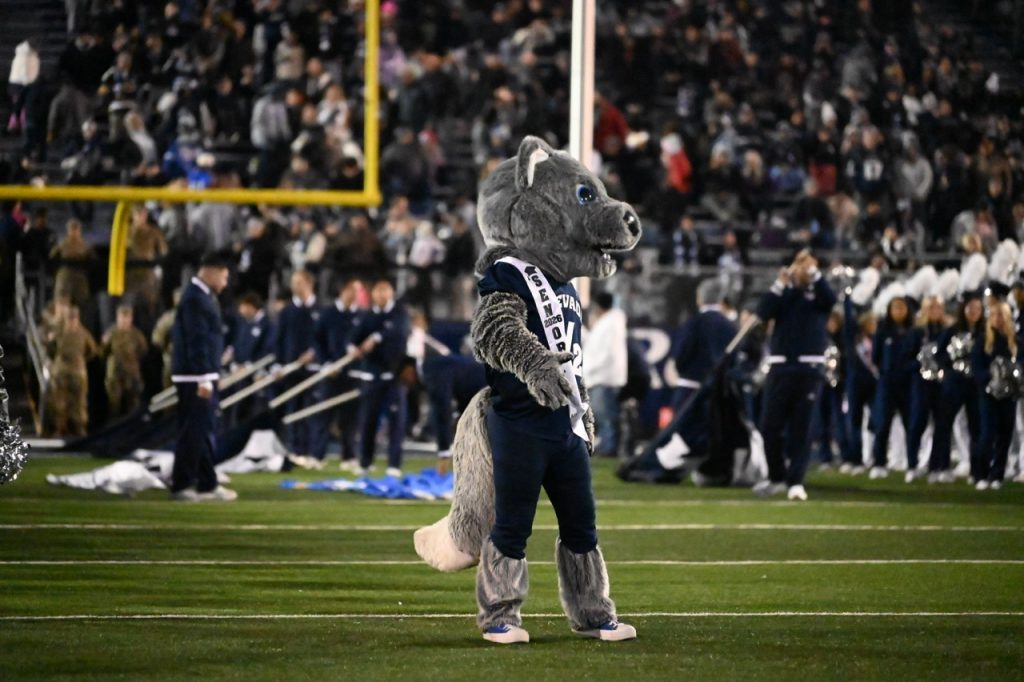
When Jack McKinzey suits up for a game, it isn’t the same as a typical student-athlete. He still wakes up early, eats a healthy breakfast and prepares himself mentally, but his uniform requires what he described as a second personality, a kind of acting and experimentation that other athletes don’t need when they pull on their jersey. That’s because McKinzey is Wolfie Jr. at the University of Nevada, Reno.
McKinzey has worked as Wolfie Jr. for the past three years, since he was a sophomore in college, but he began his career as a mascot well before that at Bishop Union High School in Bishop, California. For McKinzey, being a mascot allows him to have fun with a character, make people smile and support his university.
“You hop in there and you’re like, alright, I’m Wolfie,” McKinzey said. “It’s a whole process, but you just kind of learn how to fit into that new body. It’s really weird, but it’s what you have to do.”
One of the biggest reasons that he wanted to try out for the mascot program at UNR, however, was because of the hefty scholarship that Nevada mascots receive. All students who are Wolf Pack mascots receive a scholarship that provides them with full in-state tuition at the University.
They also receive student-athlete privileges, such as having their books paid for, priority enrollment in classes and athlete breakfasts. The financial incentive was also extremely important for Kyla Segovia, a senior at UNR who has been playing Luna for the past three years.
“My freshman year, I had a really hard time adjusting to the change of coming to college, and I was actually crying to my RA about how I did not want to be here anymore, and they recommended that I try out,” Segovia said. “They mentioned that I would get my tuition paid for, which was an extreme benefit for me, just as me and my dad were already struggling to figure out how to pay for college.”
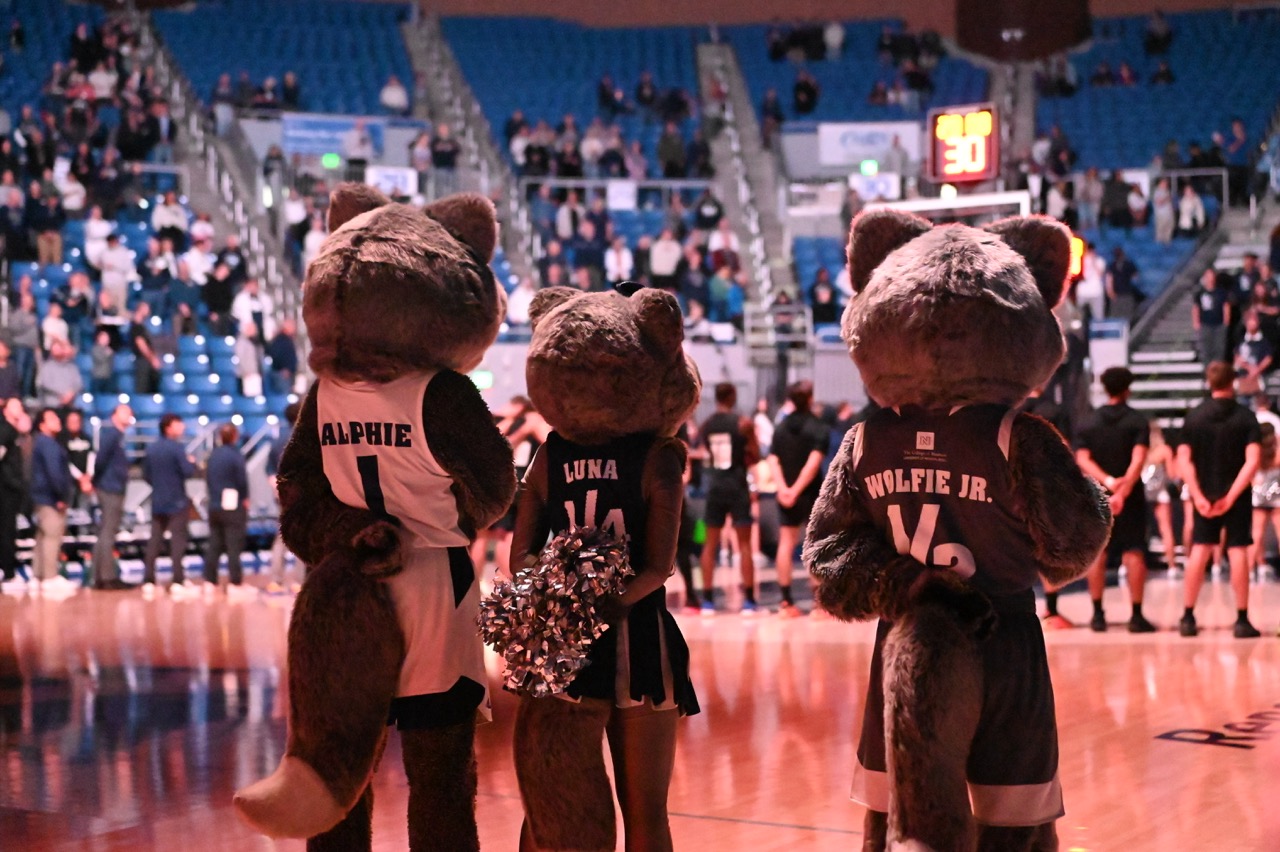
The Nevada Wolf Pack is the only team in the Mountain West Conference with three mascots —Alphie, Wolfie Jr. and Luna — representing a family or “pack” of wolves. All are meant to be descended from Wolfie Sr., the original mascot for Nevada from the 1920s. Alphie was introduced in 1999, Wolfie Jr. in 2007 and Luna in 2013.
The three mascots are typically portrayed by six students total, each of whom is on the full in-state tuition scholarship funded by the UNR Athletic Department.
This scholarship was first awarded to the mascots in 2020 after years of petitioning from Kim Anastassatos, the head of Nevada Spirit and the associate athletics director for special events, to award the mascots scholarships. It is now the biggest scholarship awarded under Nevada Spirit.
“For years I tried to get the mascots scholarships,” Anastassatos said. “It’s the biggest scholarship that Nevada Cheer has ever seen in decades.”
Just this past year, however, the requirements for the scholarship changed. The students must now make it through one academic year in the mascot program before they receive the full in-state waiver.
Although first-year mascots are still awarded student-athlete privileges, this change begs the question of why it is necessary, as well as whether it’s beneficial to the program.
“I very much think, you know, this is a good idea and it has its reasons for being implemented, but I do feel like it will hinder the program,” McKinzey said.
For many student-athletes, having a job outside of school can be nearly impossible, and the same can be said for the mascots. So, the scholarship privileges that they are awarded can become an almost necessary incentive for the time that the athletes put in. Breanne Burns, a junior and mascot at UNR, has faced a similar difficulty.
“Being on the team with everything, it makes it hard to hold a job or anything, just because it’s so busy,” Burns said.
Many of the mascots expressed the same ideas about their reliance on the scholarship, and McKinzey does not know whether it will be sustainable for the future of Nevada Spirit’s mascot program, since he believes that the biggest motivator to keep the mascots available and ready to perform is the financial incentive.
“If I would take myself and put myself in those shoes, I would have a pretty tough decision to make,” McKinzey said. “Would I consider it? Yes. Would I have taken that deal personally? Maybe not. It’s emotional, and, you know, not getting any scholarship for that, I very much would not have done it because it was a big part of why I did it.”
Segovia, however, does not think that this change will affect the program much. In fact, she believes that it will be beneficial to Nevada Spirit and the program as a whole.
“I think that it’s just kind of been a way to hopefully hold people more accountable to keep people here for longer, knowing that after you complete a first full year and you come back that you will get the full tuition [scholarship],” Segovia said.
Anastassatos, who is the original petitioner for the scholarship, is also the one who decided to make the change. For her, it is not meant to punish the athletes or to cut down the budget, but to hold the mascots accountable academically.
“Each year there tended to be someone new on the team that would come to be on the team and then they would not get the grades to be able to stay on the team, yet they had gotten this scholarship,” Anastassatos said. “Because it is such a huge privilege that the University doesn’t have to give us, that they get to give us, I felt like I needed to be able to protect that.”
In previous years, there had been multiple mascots who would try out for the program only to drop out halfway through the year due to bad grades, leaving the other students to pick up the slack. Both McKinzey and Segovia themselves were originally replacements for mascots who had dropped out halfway through the academic year, and Burns has recently had to play Wolfie Jr. at some events due to a student dropping out after the fall semester.
“Every year I’ve been on the team, we’ve lost people halfway through the year,” Segovia said. “Typically that’s due to grades. That became a struggle for us because it meant we either had to find a new mascot or everybody else’s schedules became even more intense because we were picking up the slack.”
Mark Ubando, one of Nevada’s two mascot coaches, claimed that the most important aspect of choosing mascots isn’t the animation or engagement, since that can be taught, but the commitment that the athletes show in their interviews.
“I’d rather have someone that’s not as animated yet as opposed to someone that’s really animated that doesn’t have that time commitment,” Ubando said.
The students in the mascot program will still be on scholarship their first year, though it is smaller than the full in-state tuition that they can receive every year after. The students are eligible to receive $1,000 their first semester as a mascot and $2,500 in their second semester. For McKinzey, this does not adequately compensate the mascots for the amount of work that they put into the program.
“I get the justification for it, I really do, but I feel like there’s a better, case-by-case basis or even a semester option,” McKinzey said.
This re-structuring of the scholarship requirements came as a part of a series of recent changes to the program, including a different tryout structure that includes an information meeting in order to attract more students, and different graduation stoles for the graduating mascots.
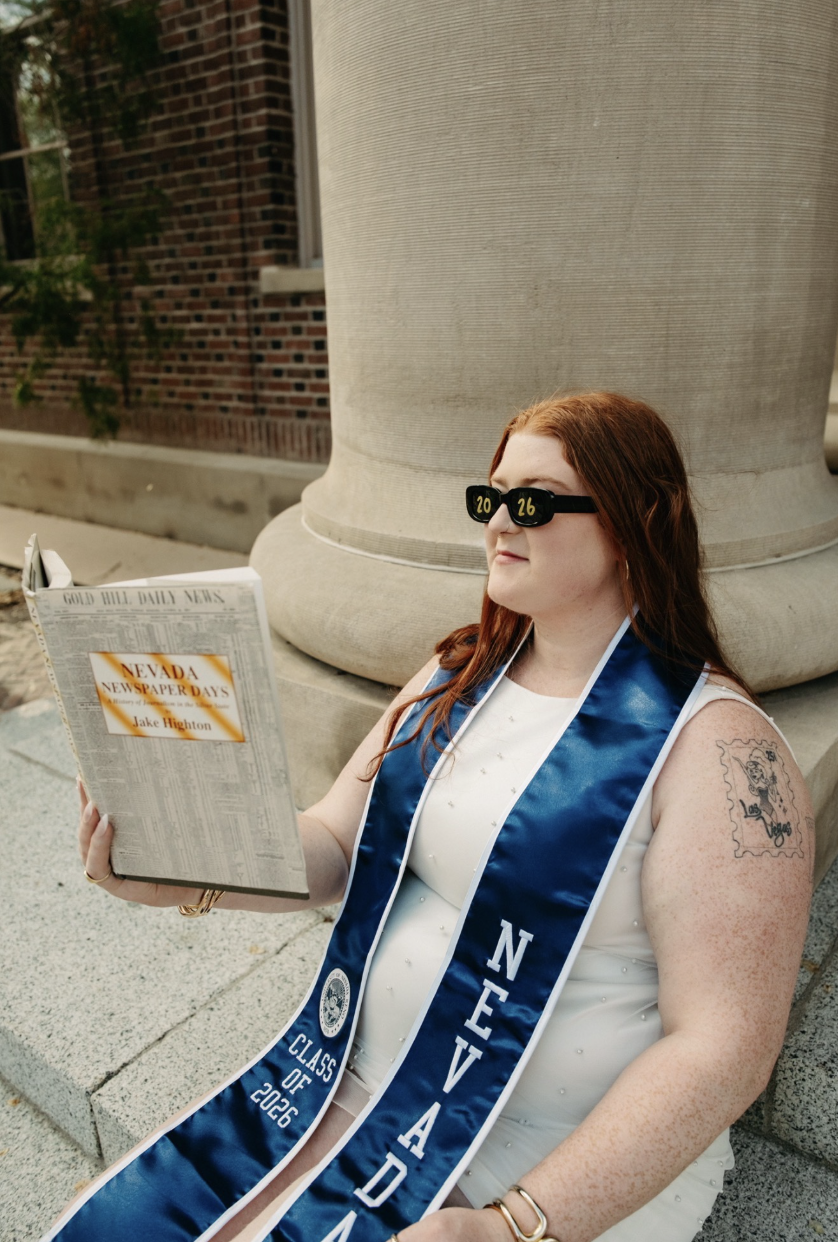
The stoles — which previously said “Student Athlete” — now say “Nevada Spirit”. Although there was some controversy within Nevada Spirit when the change was originally made in the spring of 2025, the current students who will be receiving the stoles have no problem with the change. In fact, they believe that it is for the better, since the mascots are officially a part of Nevada Spirit.
“I think that it’s a fun change and it kind of sets us apart from other athletes, since we do a lot of community service and a lot for the University,” said Segovia, who will be graduating this spring. “I personally view it as a special thing that the athletics department decided to do for us.”
Anastassatos is still planning to help the mascots financially. She hopes that they can someday be paid hourly for off-campus events, and she is looking into hiring a non-student to be a mascot for events that the students cannot attend. Although the current mascots might not see a day when these changes come to fruition, they still believe that it would be an amazing benefit for future mascots to have.
“I do hope they continue to make changes,” McKinzey said. “I would love to see this program grow.”
These changes have been talked about for a long time, though there are reasons as to why the mascots have not been able to receive hourly pay yet. These include difficulties of defining what an off-campus event might be, as well as what constitutes community service, finalizing a budget for the mascots, and scheduling, since many of the events come up on a week-to-week basis and the program is unable to have a monthly schedule.
“I think the biggest challenge is explaining that this is not just the athletic department’s mascot, but it’s the University’s mascot, it’s the city’s mascot, it’s Northern Nevada’s mascot,” Anastassatos said.
As of this May, the University of Nevada, Las Vegas, no longer has a costumed mascot — a change initially made in 2021. Because of this change, the Nevada mascot program became the only Division I mascot program in the state.
“Now that UNLV doesn’t have a costumed mascot, the Nevada Wolf Pack is exclusive, so now they’re on demand more,” Ubando said.
This change, and the expected influx of aspiring mascots to Nevada, could change the way that the program is run, and has already increased the number of mascots in the program from the typical six students to seven just this past semester.
As for current and future changes to the program, there will continue to be a focus on time commitment and community service when the athletes are chosen, and no new changes to the scholarship requirements are expected to be made.
McKinzey, though skeptical of how the scholarship change will help the program, still encourages anyone wanting to join the mascot program to consider it, since there are more benefits than the financial incentive.
“Those that might think, ‘hey, I want to be a Nevada mascot maybe, and I’m interested in doing it,’ I think they should,” McKinzey said. “I got to do so many fun things and meet so many cool people.”
Ubando, who has been the mascot coach since 2007, and who was Alphie for UNR before that, agrees with McKinzey’s claim that the benefits of the program are numerous, and said that Nevada Spirit changed his life. He stated that he will continue to coach for as long as he can.
“Nevada Cheer, Kim, everything, they’ve really changed my life,” Ubando said. “It’s helped me become who I am now and I’m just very blessed. It not only helped me get to where I am now but there are a lot of moments where it kind of really saved me.”
Information about mascot applications can be found on the Nevada Cheerleading website.