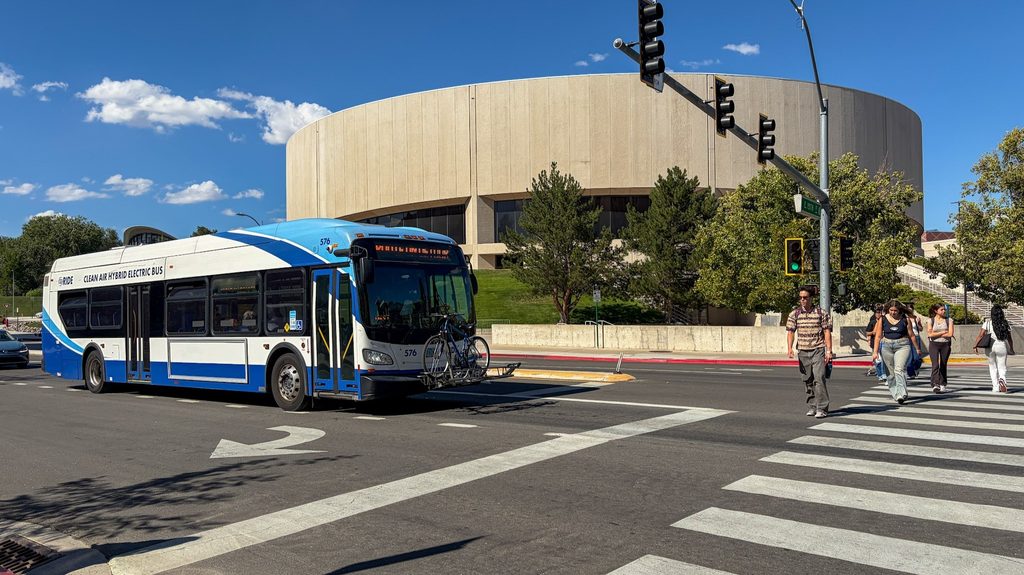
RTC bus in front of Lawlor Event Center. (Cece Arroyo/The Nevada Sagebrush)
Professional sports have been growing rapidly in Reno. Many teams have come and gone through the city, but since the Aces – who recently extended their stay in the city until 2049 – came to Reno in 2009, the world of professional sports has only expanded in Northern Nevada.
Since then, Reno has seen the introduction of the Reno 1868 FC professional soccer team and the Reno Ice Raiders semi-professional hockey club. Although Reno 1868 FC folded after its 2020 season, in September 2025 the United Soccer League announced the introduction of a new pro soccer team in Reno, currently known as Reno Pro Soccer.
With the Grand Sierra Resort’s (GSR) new arena being underway as well, with a basketball court and ice rink, the space opens the opportunity for more teams to come to Nevada.
This is only a part of what is making Reno a growing sports town, but the current Regional Transportation Commission (RTC) transit services do not allow for easy access to these facilities. Instead, residents who rely on public transportation are required to take trips that may be up to three or four times longer than if they drove.
Many Nevada students who live on campus do not have cars, finding it easier to walk or take the bus to any place they might need. The campus sits close to downtown, the University offers free transportation to grocery stores, and many students are able to eat, work and socialize on campus.
There are also many Reno/Sparks residents who do not have the ability to drive, including younger teenagers, who may be interested in going to different sporting events but without their own car or license must take the bus.
Not only is Reno growing as a professional sports hub, but the University is also expanding its athletics. The GSR Arena will host the Nevada men’s basketball team once it opens, currently targeting completion in 2027. Reno Ice hosts the Nevada men’s hockey team, which, despite being a club team, has sold out nearly every game they played in the 2025-26 season.
When Nevada men’s basketball moves to the GSR Arena, it will make its mark as the first major University sport to play off campus. However, the city does not currently have plans to develop a line from the University to the GSR, although University president Brian Sandoval has stated that there are plans to bus students to the new arena. Students who want to attend basketball games will now have to take 30 to 45-minute bus rides, including multiple transfers and long walks across major roads, rather than simply walking to the north end of campus.
Reno does not have a train system, and all public transportation in Reno/Sparks is controlled by the RTC system, including buses and select van services available to certain eligible riders or residents in underserviced areas.
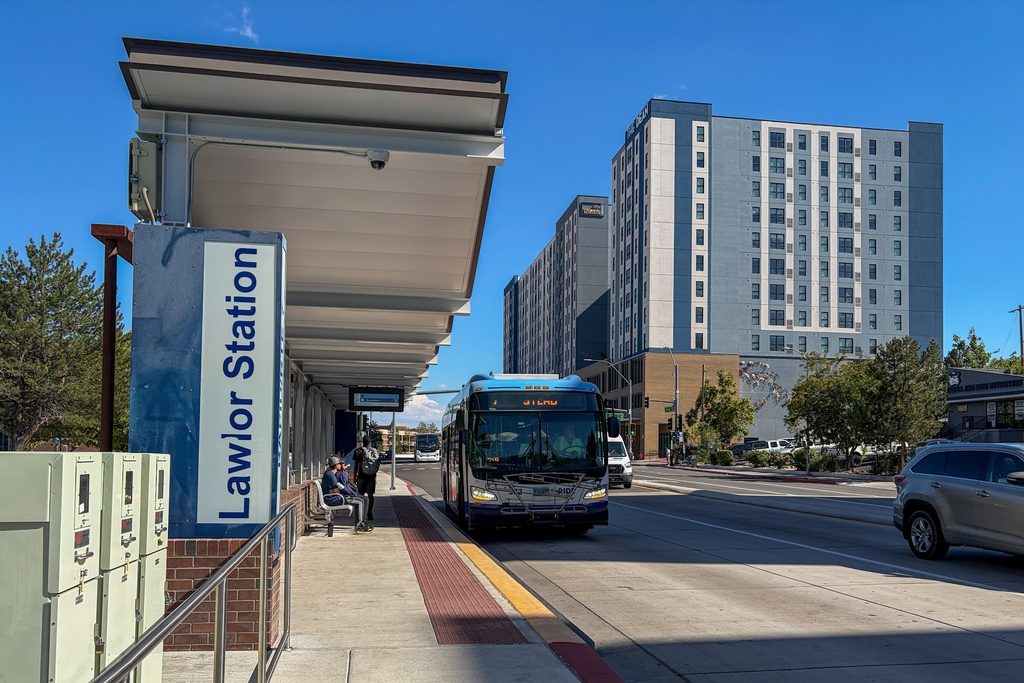
RTC line 7: Stead at the Lawlor Station in front of Lawlor Event Center. (Cece Arroyo/The Nevada Sagebrush)
The RTC has one “hub” in Reno — the Fourth Street station, which all but four lines eventually travel to. This station is only a block from Greater Nevada Field, making it simple for RTC travellers to attend Reno Aces games; however, two of those four lines that do not travel to the Fourth Street station include the Kietzke and the South Meadows/Damonte Ranch lines, the two lines which travel closest to the planned Reno Pro Soccer stadium and Reno Ice, respectively.
The RTC trip planner currently estimates around a 50-minute bus ride to the Reno Pro Soccer stadium from the University taking the Virginia line, making it necessary to cross busy roads such as Virginia Street and Kietzke Lane, which is not only unsafe for pedestrians but can become frustrating for drivers if there are large groups often attempting to cross during game days. Other fans coming from outside the University may have to take two to three buses in one ride, without the Kietzke line going to the Fourth Street station.
The RTC trip planner’s quickest route to Reno Ice from the University is even more complicated for passengers, recommending a 70-minute route, including a transfer at Fourth Street to the Carson City regional connector, and a 25-minute walk. The estimated drive is only 20 minutes.
The RTC does not service neighborhoods farther away from the city center. Areas like South Meadows, where Reno Ice is, North Valleys, an area with higher poverty and minority populations according to local census tracts, and even Verdi and Somersett, an area with higher senior populations including a Del Webb community, are all left out of service by the RTC buses.
While the RTC does offer a FlexRIDE service to these areas, the system requires riders to schedule the ride in advance. Riders may still have to wait for up to an hour, and even these services leave out many neighborhoods.
Reno and the University of Nevada are both growing in sports, bringing more people to the city and more residents wanting to travel around the city for sports. If Reno wants to continue growing as they plan to, access to public transportation needs to expand across the city, and routes need to be developed to make it easy for university students and other residents to travel to these games without planning their whole day to get to and from the games.