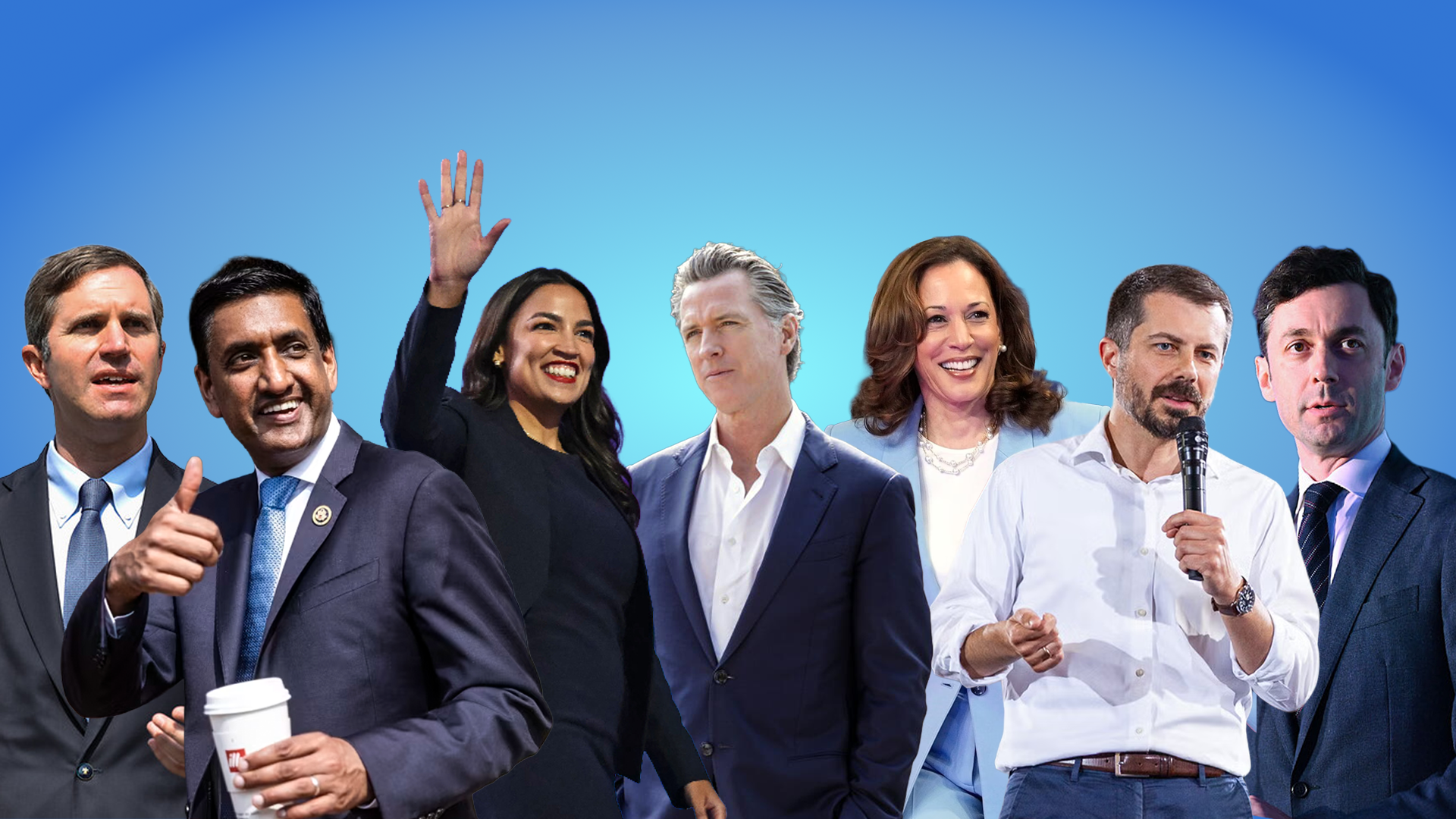

Drawing comparisons between the upcoming 2028 Democratic presidential primary cycle and the two previous competitive cycles, 2020 and 2016, is only natural for political observers. The difference this time around? None of these candidates will be running against Donald Trump.
With time winding down towards the midterm elections and the halfway point of Trump’s second term approaching, talk regarding the upcoming 2028 presidential election has begun to heat up. This is nothing new, of course; Democrats have been searching for their next candidate ever since Kamala Harris lost to Trump in 2024. Whether it be a voter base that feels cheated by the lack of a primary in 2024, or just a general fury against Trump’s current administration, Democrats have never seemed so eager for another shot at the White House.
Though this time around candidates will not be able to build entire campaigns around their resistance to Trump as well ability to beat him in a general election, for he will not be running. Instead candidates will be making their stand on their positions on A.I., healthcare and Israel — among other topics.
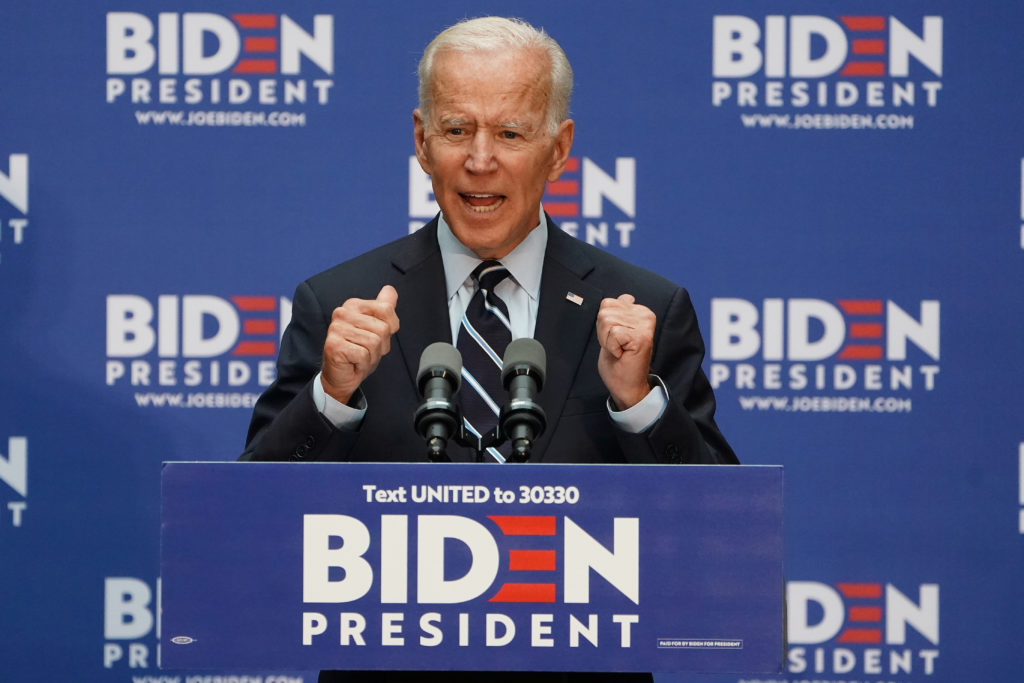
To understand 2028, we need to understand what happened during the 2020 primary. A shell-shocked Democratic Party (much like the one today) searched for the best “resistance” candidate, one that would unseat Trump. They, of course, landed on Joe Biden, the former Vice President. In doing so, they pushed out progressives vying for the nomination, such as Sen. Elizabeth Warren and Sen. Bernie Sanders. Running against a Trump fighting for reelection gave Biden an easy-enough path to the nomination without ever truly having to get in the weeds of left-wing policy differences with his progressive competitors.
Biden’s path to the nomination was not flawless, though; with a fourth-place finish in the extremely important Iowa caucus, Biden was forced to change his campaign to stay afloat. Following these changes, he began to win state primaries, coalescing much of the party behind him — moderates leading the way — with some of the final holdouts being the aforementioned progressive Senators.
So while Biden may have been able to skirt by solely on platitudes that disparaged Trump and his movement, that same strategy certainly won’t work for a 2028 hopeful, one who won’t be running against America’s most polarizing figure.
Rather, the 2028 cycle will be much closer in substance to the race 12 years before, in 2016. This is for two reasons: one being that both races feature an open competition for the presidency with no incumbent, and the second reason being that the upcoming race will likely feature a similar ideological difference to the one that characterized the 2016 primary. Though this time the general Democratic base is much more progressive/radical than it was a decade ago.
An open election can do a lot for both major parties in regard to their respective divisions and viewpoints. One party is working to maintain its power, though with a different candidate, and another is hoping to regain such power by likely offering an alternative platform to the losing one they had offered four years before.
Both of these occurrences were demonstrated to a T during the 2016 cycle. The Democratic Party nominated Hillary Clinton, who was operating on a platform extremely similar to that of the current president at the time, Barack Obama. She was, as some have put it, running for Obama’s third term.
On the other side of the aisle, the Republican Party was pivoting to its right by nominating Trump. He offered a stark contrast to the party’s last nominee, Mitt Romney, who was, by any stretch of the word, a centrist, having won the governorship of true-blue Massachusetts.
All of this is to say that the open race in 2028 will likely feature a Republican candidate who closely resembles the current administration (running for Trump’s third term, just as Clinton did with Obama), and a Democratic candidate offering something completely different from what Harris did in 2024.
With a new candidate promoting new ideals for the Democratic Party, the question then becomes: what kind of ideas does the party want defining them going forward?
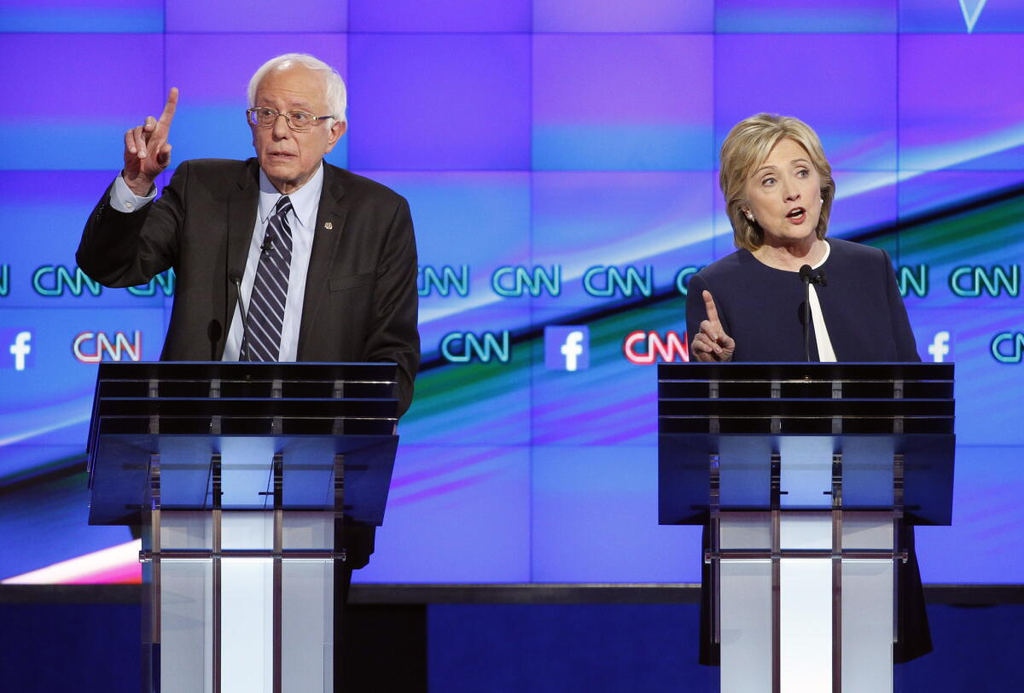
The answer to that question will likely be the result of a heated primary, similar to the contest that saw Clinton and Sanders go toe-to-toe a decade ago — the difference being that this time a more progressive campaign has a much greater chance than it did ten years ago.
This is because the party’s base has drifted left since then, and this shift has only been aided by 2024’s defeat. Following the rise of the democratic-socialist faction of the party, a third of all Democrats define themselves as democratic-socialists. And without an all-important incumbent (Trump) to rally against, candidates will have to best their fellow Democrats on real policy issues in a way that they haven’t in a long time to secure the nomination.
These presidential hopefuls are going to have to get on a debate stage and make their case on the hot-button issues that characterized much of the Democrat’s 2026 primary season. For these reasons, candidates are going to need sincere, thought-out positions on these topics in order to rise above what is sure to be an incredibly crowded field. With a slew of progressive candidates who, at the moment, best exemplify the base’s desired positions on these pressing topics, the Democratic Party could finally be in line to nominate its first true “change” candidate since Obama’s historic run nearly 20 years ago.
In that same vein, the more moderate Democrats who have for so long dominated their party’s national scene, will face an uphill battle with regard to these policies — as it stands today. Figures such as Gavin Newsom and Pete Buttigieg, who could have run incredibly competitive races in the 2020 and 2016 environments (Buttigieg won that same Iowa caucus that Biden finished fourth at during 2020), will have to shift their stances on these hot-button issues or risk the real possibility of being left behind for a more idealistic candidate. This shift has already begun to occur among these moderate politicians, with Newsom himself referring to Israel as an apartheid state, as well as just recently announcing the development of an A.I. kill switch in California, the state he governs.
The coming months will be absolutely vital for both wings of the Democratic Party, as one tries to stay ahead and maintain the majority on these matters, and the other works to regain favor among the primary voters who will decide their nominee in less than two years.