
Post-Game Clarity: Nevada Loses Heartbreaker to Air Force
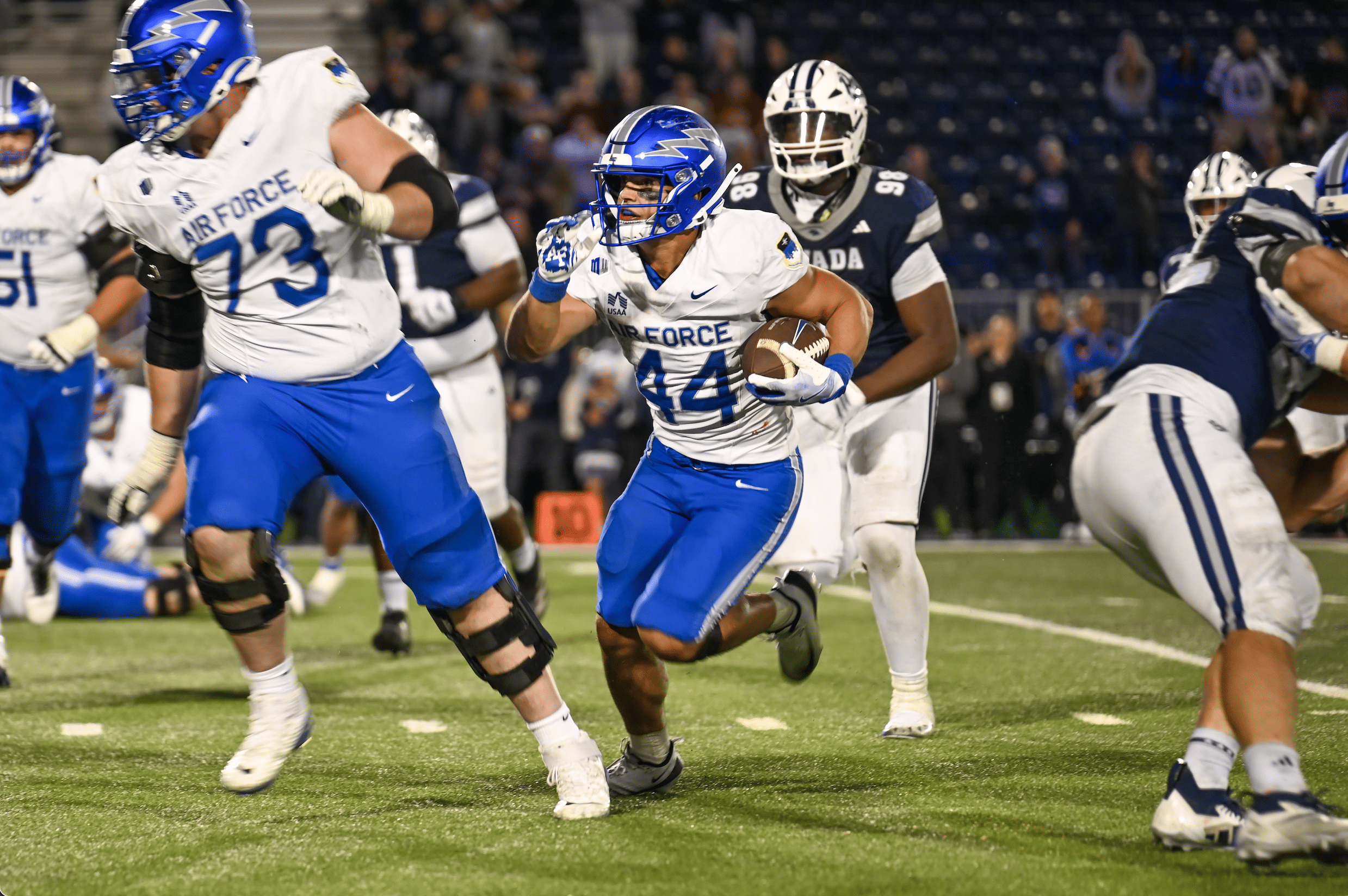
To put it simply: it seemed as if Nevada wasn’t prepared for the ground attack that the Air Force brought out. Air Force rushed for 363 rushing yards. The Falcons’ junior quarterback, Liam Szarka, had 33 carries alone, while Nevada, as a team, rushed the ball 35 times.
Many people I talked to strongly disliked the Falcons’ offensive scheme, calling it boring and timid, only throwing the ball 12 times throughout the whole game. On the other hand, I think the gameplan worked like a charm, and the run game caught the Wolf Pack sleeping.
The Falcons came into this game third in the country in rushing yards per game (319 y/g), only trailing the other two military academies. The Wolf Pack’s run defense before this contest was a little below the national average, not being anything special (157.3 y/g). This had me a little worried about how they’d fare against this unique offensive style.
The first half of the game was closely contested, as both teams traded a field goal and a touchdown to enter the half tied at 10. At this point, according to ESPN’s win probability, the game could’ve gone either way. Air Force went into the half with a 52.9% chance of victory.
Coming out of the half, both teams traded drives that ended with not much success. Falcons kicker Carter Cremascoli made his second field goal of the game, to give Air Force a brief lead.
On the following drive, the hearts of Wolf Pack fans jumped into their throats. Sophomore quarterback Carter Jones laid on the Mackay Stadium turf, with athletic trainers surrounding him. However, this wasn’t the first time Jones had an injury scare this season.
When the Wolf Pack took on the Montana State Bobcats two weeks ago, Jones rode the bench as he was nursing an injury. Backup senior quarterback Luke Duncan started that game and played alright, but when fifth-year AJ Bianco took reps, he looked like a serious backup quarterback. For me, although I was worried about Jones’ health, I wasn’t necessarily worried about the different package Bianco would bring out against the Falcons’ defense.
Bianco came out to finish the drive and found the endzone with a nine-yard rush, giving the Pack their third separate lead of the game. With 3:07 left in the third quarter, the Wolf Pack just had to stop the run, and they would be cruising to a 1-0 conference start.
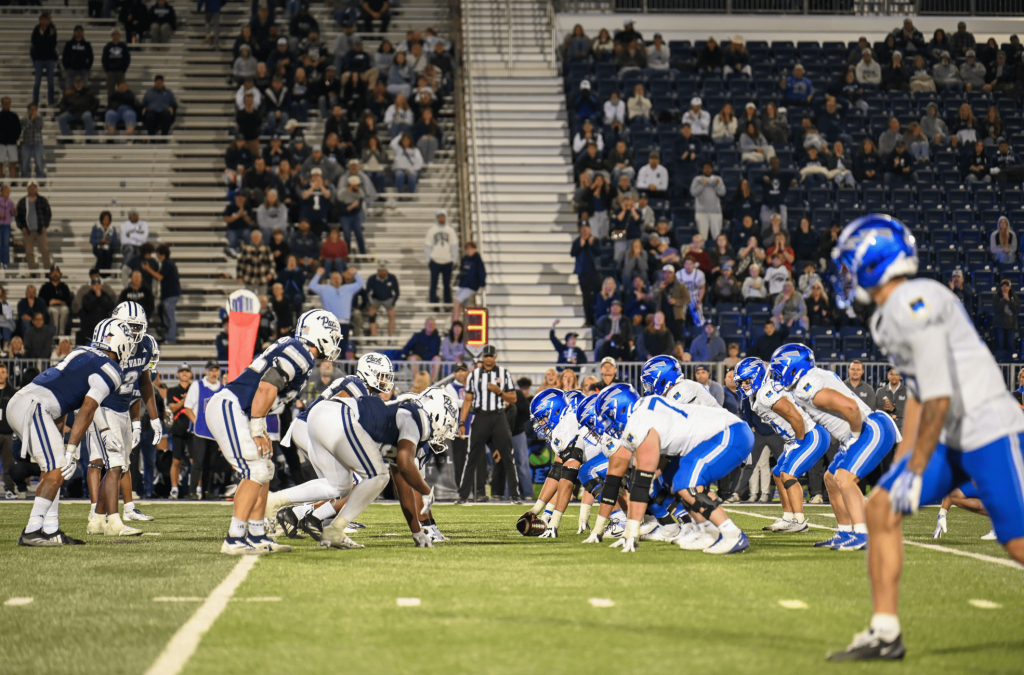
The Pack, however, wasn’t able to do that. A series of six runs and a 15-yard completion took Air Force into the red zone with just over 10 minutes left on the clock. The Wolf Pack wouldn’t be ready for what hit them next.
Szarka took the snap, and it looked like he was going to keep the ball and take off for what felt like the hundredth time — but instead, he dropped back to pass. The Wolf Pack’s defense wasn’t ready, leaving Falcons junior wide receiver Matt Long wide open to Szarka’s left, completing Air Force’s first touchdown through the air in three games this season.
The touchdown to Long gave the Falcons a 20-17 lead, with time running out. The Pack’s following drive started out promising, as Jones completed a 25-yard pass to Herschel Turner. That was followed by two stuffed rushes, a sack and an incompletion, giving the Falcons the ball back at midfield via a turnover on downs.
Back-to-back passing plays from Air Force once again caught the Wolf Pack defense sleeping, setting up Szarka for one of his signature quarterback keepers up the gut. Air Force led by ten, 27-17. Nevada’s chances looked bleak, and fans began pouring toward the exits.
With less than six minutes left on the clock, one play turned all those fans back around, and breathed life into the Mackay Stadium crowd. Jones completed a 50-yard deep ball to junior wide receiver Donnie Cheers, setting the Pack up for a quick score.
After the drive stalled, senior Wolf Pack kicker Joe McFadden drilled a field goal with 3:45 left in the game. The chances of a Nevada win still looked slim, but fifth-year linebacker Jeremy Naborne-Owens stuffed Szarka on second down, and brought him down in the backfield with a booming hit on third down to force a Falcons punt.
Less than a minute was burnt off the clock, and the Wolf Pack had the ball back with 2:40 left.
The first play was an incompletion, prompting a switch in play calling — running the ball on back-to-back plays with sophomore running back Dom Kelley for a first down.
Then, in the first play after the two-minute timeout — Mackay Stadium found its voice. Turner broke free, side stepped two Falcons linebackers and sprinted down the Falcons sideline for a 57-yard, game-tying touchdown.
27-27.
Air Force drove down the field in the final minute, before junior cornerback Bryson Snelling picked it off with 17 seconds to go, forcing overtime.
To me, college football overtime is the best, but also the absolute worst thing in sports. Nothing about it makes sense, but at the same time it’s one of the most chaotic and exciting ways to end a sporting event.
The Falcons started with the ball, but the Pack’s defense held strong, forcing a Cremascoli field goal. This gave the Pack a chance to win, but their drive also stalled, ending with a McFadden kick — his third field goal of the game.
In double overtime, Nevada received the ball first. On third-and-long, the Pack completed a pass, but missed the first down by a single yard, forcing one of the hardest decisions for a coach to make. Go for it on fourth-and-1? If you don’t convert, the game is practically over with college overtime rules, as the Falcons would automatically receive the ball in field goal-range. Settle for the field goal on fourth-and-1? You set the Falcons up to score a touchdown which they had easily scored previously in the game.
Then came a puzzling decision, as the Pack were almost caught in two minds. They ran the kicking unit out, but midway through the play-clock, brought the offense out for a chaotic play. The chaos of the play drew an illegal snap penalty, pushing the Pack back 5 yards, making it a fourth-and-6. I’m sure the Wolf Pack coaching staff had a better outcome in mind before sending both staffs out onto the field.
McFadden made his fourth field goal of the game, giving the Pack a 33-30 lead, before Falcons running back Rocco Conti strolled into the endzone on the following drive to give the Falcons the decisive 36-33 win.
The positives? The special teams play looked great, with McFadden going 4/4 on field goal attempts, and 3/3 on extra points. Along with this, the Pack’s big three on defense, senior edge Dylan LaBarbera, senior linebacker E.J. Smith, and the aforementioned Naborne-Owens combined for 51 of the defense’s 93 total tackles.
The negatives? It’s simple. The Pack lost another close game despite late efforts — and fell to 1-3 overall, and 0-1 in conference play.
The Pack’s next game contest comes on the road against the UTEP Miners on Saturday, Oct. 10 at 4 p.m.