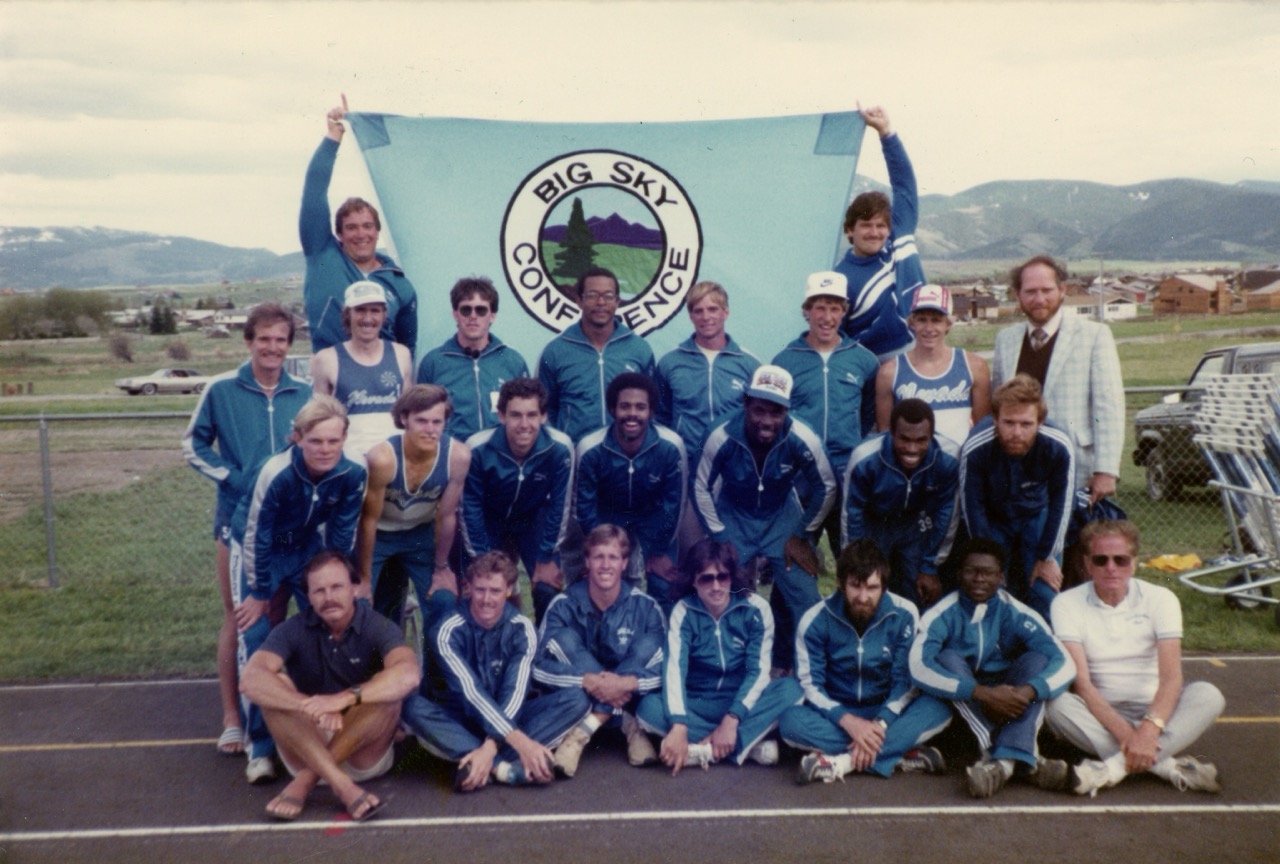

Why doesn’t Nevada sponsor a men’s track and field team anymore? What happened to the team, and will it ever come back?
The University of Nevada, Reno cut the Nevada men’s track and field team, along with the men’s cross country team, due to Title IX compliance concerns and program budget cuts on May 3, 1993.
Despite the Nevada men’s cross country team returning in 2019, the men’s track and field team has yet to. This is due to two factors: financial pressures alongside NCAA and Title IX rules.
Financial Pressures
The program ran on a budget of $200,000 a year ($460,640.10 adjusted for inflation) at the time of the team’s disbandment.
According to a Nevada Sagebrush interview from May 4, 1993 with former athletic director and head football coach Chris Ault, Nevada’s athletic department only had a budget of $1.64 million annually. In today’s economy, that is roughly over $3.6 million.
Today, the Nevada women’s track and field team operates on a total budget of $1.99 million annually and has around 4.3 times the spending power of the men’s program before its removal. Part of the reason why women’s track and cross country weren’t cut along with their male counterparts was due to the women’s program being legally insulated from being cut due to Title IX requiring that universities provide equal opportunities for both men and women.
During this time, according to a story from the Nevada Sagebrush published on May 4, 1993, the Nevada football program had a team that typically had a roster with more than 85 players. Keeping both of the women’s teams served as a mathematical counterweight, with both women’s teams having more than a dozen athletes on each team, balancing the scales.
Title IX Compliance:
The NCAA Gender Equity Specifications state, “Universities must provide equal opportunities for both men’s and women’s sports that are a part of the NCAA with no discrimination based on race or sex.”
The NCAA doesn’t directly enforce Title IX laws, but member institutions are expected to uphold gender equality laws and submit an annual gender equality progress report. With Nevada being a part of the NCAA, the school is expected to uphold Title IX and provide more opportunities for women.
Title IX is a federal civil rights law that prohibits sex-based discrimination within any educational institution that receives funds from the federal government. It is also often applied to cases of sexual harassment or violence.
Regarding athletics, Title IX has caused women’s sports participation to go up 456% since its enactment and holds institutions accountable for any inequalities between men’s and women’s sports. A story from the Nevada Sagebrush published on May 4, 1993 states that in the spring of that year, Nevada had 11 varsity sports, with there being six men’s teams and five women’s teams, and a total of 164 athletic scholarships. During this era, female athletes weren’t treated as well as their male counterparts; for example, they often had to sleep on the floor of competitors’ gymnasiums while the men’s teams were housed at hotels. These disparities highlight the inequality in the Nevada athletes’ programs, which was a part of the broader context surrounding cuts to the men’s track team.
So will men’s track ever come back to Nevada?
Short answer: it already has! Long answer: it’s complicated.
In the spring of 2026, Nevada State University (NSU) brought back men’s track and field to Nevada. This was the first time any Nevada university has seen a men’s track team in about three decades, giving young men an opportunity to run in their home state again.
Young men in the past had to choose between quitting the sport they love or moving far away to continue participating. NSU has since added a third option to this inconvenience. But NSU is only one school with limited roster spots and scholarships; so far, no other NSHE institution has added or reinstated men’s track and field.
University of Nevada, Las Vegas (UNLV) also previously had men’s track. Still, their program ended following the 1981 season, as did Tucker Meadow Community College (TMCC), located in Reno, Nevada, which offered men’s and women’s track but opted to cut track and cross country altogether after budget restraints.
In the past few weeks, Nevada student Kyle Parker has introduced a Track and Field Club for the first time in the school’s history.
“I’d say that the main goal of the club is to have a team where anyone can compete and stay in shape,” Parker said. “Students who did track in high school or are interested in track at all now have a team to practice and compete with where they wouldn’t otherwise.”
So, if NSU can bring back men’s track and give hope to young men, why can’t other NSHE institutions do the same?