
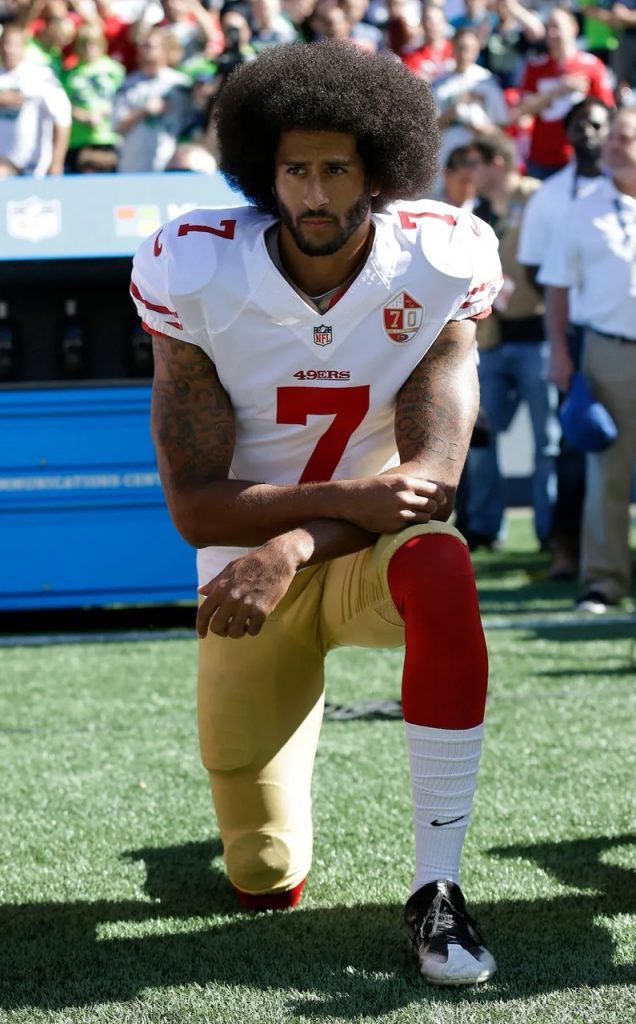
Colin Kaepernick kneeling in protest during the “Star Spangled Banner.” Image courtesy of Britannica.
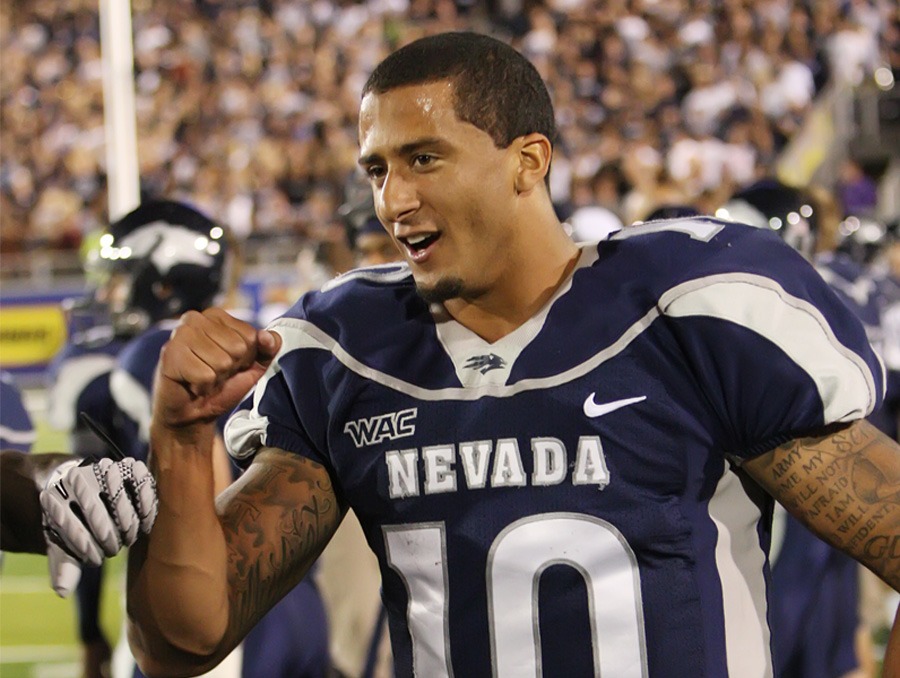
In the fall of 2016, Nevada alumni and then San Francisco 49ers Quarterback Colin Kaepernick made more than national headlines, he made history. The star signal caller kneeled during the singing of the National Anthem before a preseason matchup against the San Diego Chargers.
Kaepernick’s kneeling was in protest of the ongoing police brutality and racial injustice taking place in the United States. The move made national headlines making Kaepernick the topic of conversation in so many American communities. He, however, was no stranger to the spotlight having started for the 49ers in the Super Bowl just three years prior, losing 34-31 to the Baltimore Ravens.
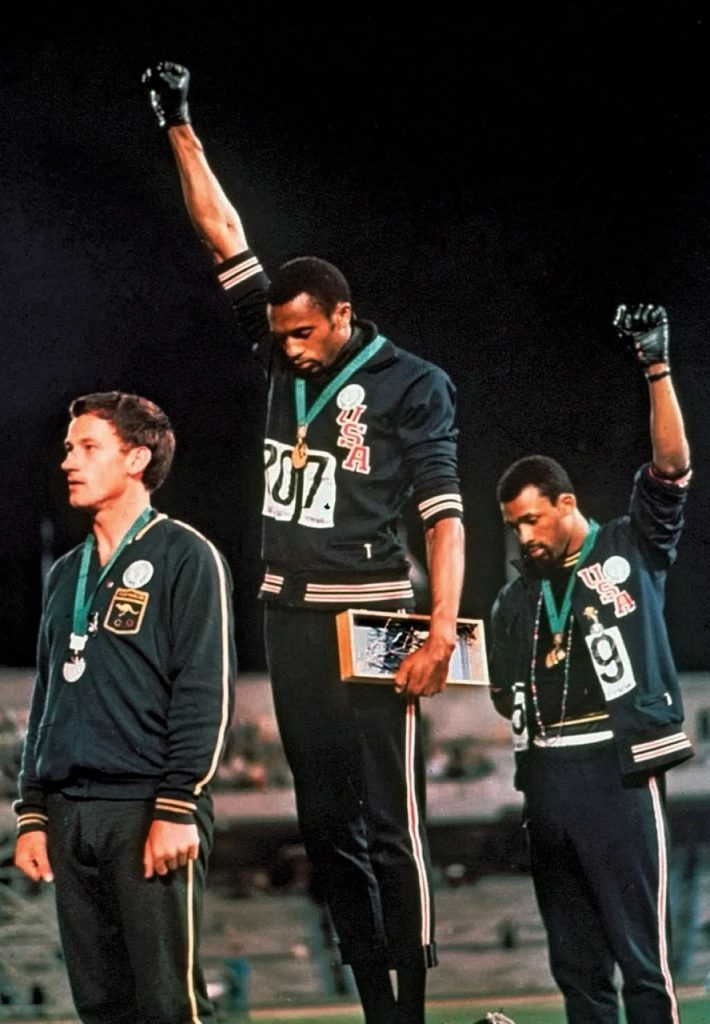
Kaepernick is not the first American athlete to protest social injustice during the “Star Spangled Banner.” During the 1968 Summer Olympics, American sprinters Tommie Smith and John Carlos each raised a gloved fist and bowed their heads (known as the Black Power salute) during the song to draw attention to racial inequality during the country’s civil rights movement.
Following Kaepernick’s protest, the Nevada legend faced attention that ranged from both criticism and support of his demonstration. Just weeks later, eleven other National Football League players joined Kaepernick in protest once the league’s regular season started, including Brandon Marshall, another Wolf Pack alumni.
On the contrary, numerous influential voices immediately spoke out against the 49ers star. Then Supreme Court Justice Ruth Bader Ginsburg referred to Kaepernick’s protest as “dumb and disrespectful.” Justice Ginsburg later apologized for her comments.
Throughout the rest of the 2016 season, countless NFL players and professional athletes from other sports took part in a variety of pregame protests to show solidarity with Kaepernick and his movement. At the end of the season, he opted out of his contract to test free agency — likely in hope to ink a more lucrative deal — though he was never signed again. To this day, Kaepernick has not officially retired, stating that he still has a desire to compete professionally as late as 2023.
In 2018, more than a year since Kaepernick had last taken an NFL snap, Nike restructured his endorsement deal to a “star-level” contract, sparking even more controversy, this time from a uniquely powerful source. President Donald Trump, then in his first term, stated that the new ad campaign was “a terrible message.”
Though this was Trump’s first time directly addressing Kaepernick, he had previously made comments regarding the ongoing social justice movement. Most notably the President wished NFL owners would “get that son of a bitch off the field,” in response to players kneeling during the National Anthem.
Despite the President’s remarks, the initiative remained prominent in professional sports, as the 2020 “Black Lives Matter” movement gripped the country and gave Kaepernick’s cause a renewed energy. This time, backlash was far less common with America’s top sports leagues throwing their support behind the movement. The National Basketball Association famously painted “Black Lives Matter” on their basketball courts while debuting “social justice” jerseys during the Covid-19 restricted bubble.
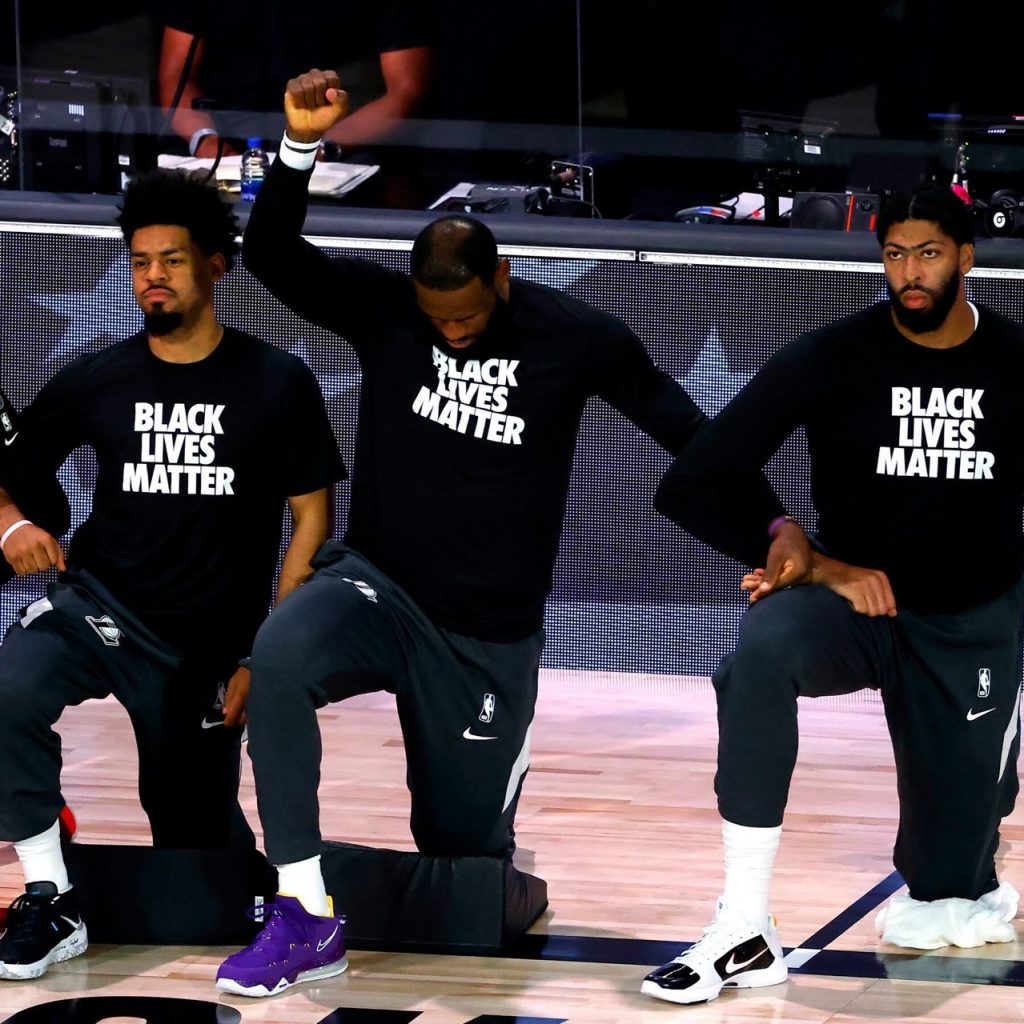
In the years since the BLM movement, athletes have continued to speak up for their beliefs, even in controversial and unprecedented manners. Professional leagues have also stuck with messages of social equality even after the summer of 2020 passed. For example, the NFL has implemented social justice inspired text in their end zones, including the phrase “End Racism.”
Though Colin Kaepernick was not the first athlete to protest during the National Anthem, nor was he the first person to speak out against police brutality and social justice issues, he certainly became one of the most famous examples of someone doing so. And even after an entire decade has passed since he voiced his opinion, the movement that Kaepernick so staunchly supported, has become a staple of American sports.